What Mangroves Mean for Sri Lanka’s Coastal Communities

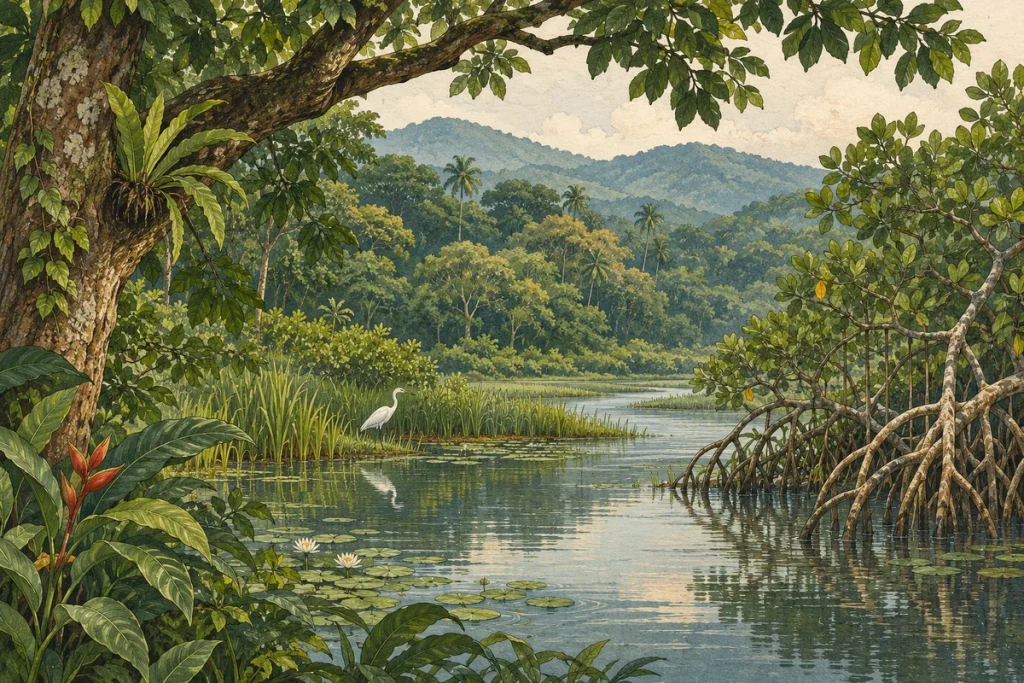
Mangroves occupy a boundary that is easy to misunderstand. They are coastal forests shaped by water and changing conditions, with roots, sediments and living organisms forming an interconnected habitat. Treating them as an ordinary tree-planting site misses that relationship.
In 2024, Sri Lanka’s mangrove regeneration work was recognised as a UN World Restoration Flagship. UNEP’s account of the work emphasises science and community involvement, including the importance of understanding conditions at a restoration site.
Why the setting comes first
Planting is a visible action, but a photograph of seedlings does not show whether a habitat will recover. The movement of water, the suitability of a site and the pressures affecting it need attention. Restoration involves understanding why a system has declined and what must change for it to function again.
For the public, this changes the questions worth asking about a project. How was the location chosen? Who is responsible for monitoring it? Are nearby residents involved? A programme that can explain its methods and follow-up is easier to assess than one that reports only a planting-day total.
Communities are part of the landscape
People living near mangroves have everyday knowledge of the surrounding area. Conservation plans need to take their work, access and concerns seriously. Community participation is more meaningful when people help shape decisions and understand how the work will be maintained.
Visitors also have a role. Stay on permitted routes, keep litter out of waterways and avoid disturbing roots or wildlife for a closer photograph. A quiet visit can reveal more than an attempt to turn the habitat into a backdrop for an activity.
Look for lasting care
Environmental work is often judged by what happens on launch day. Mangroves encourage a longer view. Monitoring, local stewardship and attention to the surrounding water system may be less visible, but they are central to whether an intervention remains useful.
For Sri Lanka’s coastal communities, the strongest conservation story is therefore not simply that more trees have been placed in the ground. It is that the conditions supporting a living habitat are being understood and cared for over time.