New Vehicle Import Rules Reshape Consumer Buying Decisions

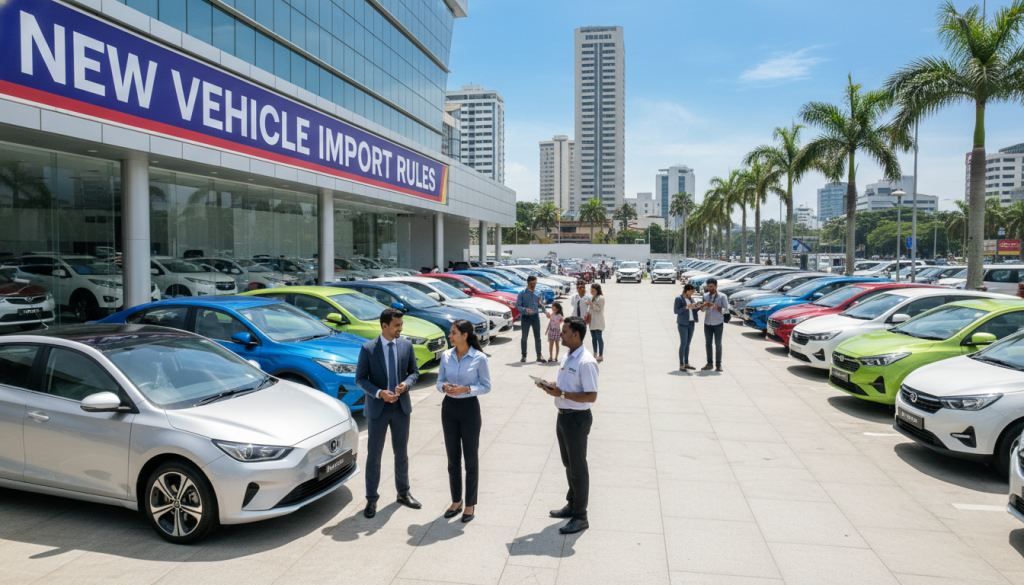
Sri Lanka’s automotive landscape is poised for a major shift. The government has announced significant updates to the regulations governing how cars and other automobiles enter the country.
These upcoming policy adjustments, set to take effect in May 2026, will fundamentally alter the financial equation for anyone considering a purchase. The changes follow a year where revenue from bringing in foreign-made cars reached a record high.
The core of the update involves how a vehicle’s age is calculated for tax purposes. This, combined with revised duty structures, is expected to increase the final cost to buyers substantially. Reports suggest prices for average-sized cars could see a sharp rise.
This move aims to encourage local assembly and manufacturing activities, particularly for electric vehicles (EVs). The long-term goal is to develop a more self-sufficient automotive sector within the island nation.
For the everyday Sri Lankan, the immediate impact will be felt at the dealership. Understanding these coming shifts is crucial for making informed financial decisions in the near future.
Sri Lanka’s Vehicle Import Boom Faces a 2026 Revenue Shock
A parliamentary analysis reveals a dramatic surge in government income for 2025, with the automotive sector contributing a dominant share. According to the Committee on Public Finance (COPF), nearly Rs. 600 billion of the Rs. 1 trillion increase in total tax revenue came from levies on automobiles brought into the country.
This performance shattered official expectations. The government had initially projected collections of Rs. 450 billion from these sources. Actual receipts, however, soared to approximately Rs. 650 billion.
This represents a massive jump from the modest Rs. 50 billion increase recorded just a year earlier, in 2024. The scale of this fiscal windfall highlights the sector’s outsized role in national finances last year.
Such a peak is widely seen as unsustainable. It sets a remarkably high benchmark that will be difficult to match. The data underscores how dependent treasury inflows became on this single stream of commerce.
Record Tax Revenue in 2025 Sets a High Bar
The Rs. 650 billion collected from taxes on foreign-made cars provided an unexpected boost to state coffers. This influx was fueled by a significant rise in the value and volume of shipments entering the country.
By late October 2025, Letters of Credit opened for this purpose had reached US$ 1.8 billion. Of that, about US$ 1.2 billion had been cleared, indicating a frenetic pace of activity.
This import frenzy translated directly into the record tax haul. It created a fiscal scenario where government revenue was tightly linked to the health of this specific market.
COPF Report Projects a Significant Drop in 2026
The same COPF analysis forecasts a sharp correction. Tax revenue from this stream is projected to decline to around Rs. 550 billion in the coming year.
This anticipated drop of about Rs. 100 billion is linked to an expected fall in import volumes. The total value of shipments is forecast to decrease from US$ 1.5 billion in 2025 to approximately US$ 1.2 billion in 2026.
The projected downturn signals a return to more normal levels after an exceptional year. It also reflects the impact of upcoming policy adjustments slated for May 2026, which are expected to alter the financial calculus for importers.
This volatility shows how the sector’s contribution to national revenue can swing dramatically. The stage is now set for a discussion on the specific policy and economic factors driving this anticipated slowdown.
The Policy Shift: Understanding the Upcoming Import Rule Changes
Beginning in mid-2026, a series of technical changes will alter how taxes are calculated on automobiles. The adjustments focus on two main areas: how a car’s age is determined and the base duties applied. Together, they form a clear strategy to manage the flow of foreign-made automobiles into the country.
This policy shift moves the goalposts for businesses that bring in cars. It also makes the final price for buyers more predictable, but often higher. Understanding these mechanics is key to grasping the future costs.
Shift from Import Date to Manufacture Date for Age Calculation
One of the most significant changes involves the clock used to determine a vehicle’s age. Previously, officials calculated age from the date it arrived in Sri Lanka. Now, they will use the original factory production date.
This shift has a major practical effect. A car sitting in a foreign port for several months will no longer be considered “younger” upon arrival. Its taxable age will be higher from day one.
For used imports, this is crucial. Older cars typically attract higher tax rates. The new method removes any ambiguity or potential for manipulation regarding the timeline. It standardizes valuation across the board.
Increased Effective Customs Duty and New SSCL Tax
On top of the age calculation change, the base levy has been raised. The effective customs duty rate was increased to 30% in February 2025. This rate applies to the car’s Cost, Insurance, and Freight (CIF) value.
Furthermore, the Budget for 2026 introduces an additional charge. A Special Sales and Turnover Tax (SSCL) of 2.5% will be applied from April 2026. This tax acts as another layer on the existing structure.
The combined impact raises the fundamental cost of bringing any automobile into the market. It applies to both completely built units (CBUs) and those arriving in parts for local assembly (CKDs).
Sri Lanka is not alone in adjusting its rules to guide the market. Other nations are taking similar steps to protect domestic industry.
- Malaysia, for example, has reinstated stricter requirements for electric vehicles (EVs).
- Effective July 2026, imported EVs must have a minimum CIF value of RM200,000 and a motor output of at least 180kW.
- The goal is to encourage local manufacturing and prevent an influx of lower-cost models.
These regional trends highlight a common focus. Governments are using tariff and regulatory tools to shape their automotive sectors. The intent is often to foster domestic production capabilities.
For Sri Lankan imports, the new rules mean more complex calculations and higher upfront expenses. The government’s aim appears to be managing volume and encouraging investment in local assembly plants, especially for electric vehicles.
How New Vehicle Import Rules Reshape Consumer Buying Decisions
For the average Sri Lankan, the complex tax revisions translate into one primary outcome: a higher price tag at the dealership. The regulatory adjustments are not just government figures on a page. They form a direct line to the final amount a person must pay for personal transportation.
This connection between policy and pocketbook will redefine what is affordable. It will also influence which types of automobiles people choose to bring into their lives.
The Direct Impact on Final Showroom Price Tags
The link between increased levies and retail costs is straightforward. Every percentage point added to customs duty or a new turnover tax flows directly into the final price.
A recent consumer report highlighted this stark reality. One buyer told the BBC that the cost of an average-sized car had doubled. It jumped from 2.5 million rupees to five million rupees due to cumulative tax and price increases.
This dramatic hike creates a significant psychological and financial barrier. Individuals who have been waiting for the right time to purchase now face a much steeper climb.
The promised access to certain models remains, but at a value proposition that has fundamentally changed. For many, the dream of a new car is being postponed or radically downsized.
Pushing Buyers to Consider Different Vehicle Segments
Faced with these rising costs, buyers are being forced to recalibrate their expectations. A common strategy is to look at a lower segment than originally intended.
Someone aiming for a luxury sedan may now settle for a well-equipped mid-range option. Others are shifting their gaze from brand-new cars to newer used vehicles. This search for value reshapes demand across the entire automotive market.
This move by consumers has a ripple effect. It can increase competition and interest in specific categories, such as hybrid or fully electric EVs, if their tax treatment remains favorable.
Furthermore, access to financing becomes a more critical part of the equation. Changes to loan-to-value ratios, expected alongside the May 2026 tax shifts, could require larger down payments.
This financial impact may further push buyers toward more affordable segments. The government’s strategy to encourage local assembly relies on this shift in consumer behavior. It hopes that altered demand will attract investment from global manufacturers.
Ultimately, the updated regulations create a clear cause-and-effect chain. Government policy alters the financial landscape, which directly guides individual purchasing choices.
Market Saturation and Dealer Stockpiles Dampen Import Volume
Industry analysts point to two clear factors now slowing the flow of foreign-made cars: saturated demand and cautious dealers. The record sales of 2025 have created a unique situation in the local automotive sector. This natural cooling-off period directly influences the projected drop in import volumes for the coming year.
2025 Buying Frenzy Exhausts Immediate Demand
Many individuals who had the means acted last year. Purchases of luxury and high-value vehicles were largely completed during the 2025 surge. This activity exhausted a significant amount of pent-up consumer desire.
The consequence is visible on showroom floors. Dealers are now managing larger inventories of unsold cars. These stockpiles reduce the immediate need for placing fresh overseas orders.
This inventory glut could last for several months. It contributes to the forecast of lower imports and, therefore, reduced government tax revenue in 2026. The market is taking a breather after an exceptional period of activity.
Dealers Warn of Risks with Non-Authorized Imports
Leading motor trade associations are issuing clear guidance to the public. They caution against purchasing automobiles through unofficial, non-authorized channels. Their warnings focus on protecting business integrity and consumer safety.
The risks associated with such vehicles are often hidden from view. Buyers may encounter serious problems after the sale is complete.
- Undisclosed Accident History: A car may have significant prior damage that is not reported, affecting its safety and price.
- Odometer Fraud: Mileage readings are sometimes rolled back to make a vehicle appear newer, misleading buyers on its true condition.
- No Manufacturer Warranty: These imports typically come with no factory-backed guarantee, leaving owners fully responsible for repair costs.
- Lack of Genuine Parts: Finding authentic replacement parts can be very difficult, compromising repairs and long-term reliability.
Authorized dealers emphasize that their business model provides access to certified models, proper warranties, and certified service. This professional advice aims to steer purchasers toward safer, more transparent transactions.
Together, this market saturation and the push for authorized supply are reshaping the landscape. They work alongside the policy changes scheduled for May 2026 to influence what vehicles are available and how they are sold. For consumers, understanding this shift in supply and sales dynamics is as crucial as knowing the tax rules.
A Closer Look at the Changing Tax Structure for Vehicles
Revenue projections for 2026 hinge critically on the fate of a single, temporary levy. The final price of an automobile in Sri Lanka is not determined by one charge, but by a stack of them. Each component has its own rules and projected path.
Understanding this layered system is key to grasping future costs and government revenue. The policy mix includes both volatile and stable elements.
The Rise and Expected Fall of the Excise Duty Surcharge
Excise duty collection swelled to an enormous Rs. 396 billion in 2025. This was driven by a temporary 50% surcharge applied on top of the standard rate.
The surcharge significantly inflated the tax burden on incoming automobiles. It was a major contributor to the record revenue haul for that year.
Official forecasts now point to a sharp decline. If the surcharge is not extended, excise duty income is projected to fall to around Rs. 266 billion in 2026.
This expected drop of Rs. 130 billion represents a core part of the coming fiscal shock. It highlights how reliant the sector was on a non-permanent measure.
Stability in VAT and Luxury Taxes
Not all parts of the tax structure are in flux. Other significant levies are projected to remain stable.
Value-Added Tax (VAT) applied to vehicle imports is one such component. The luxury tax on high-value automobiles is also expected to hold steady.
This stability provides some predictability for the industry and buyers in the near term. It contrasts with the dramatic swing in excise duties.
The new Special Sales and Turnover Tax (SSCL) of 2.5% will add another layer from April 2026. This permanent charge is designed to partially offset revenue losses from the surcharge expiry.
For consumers, the net effect is a complex calculation. The falling excise portion may be countered by the new SSCL, while other taxes remain fixed.
This detailed breakdown shows which levers the government is pulling. The market for vehicles will react to these specific cost changes in the coming years.
The Loan-to-Value Ratio Reduction: A Barrier to Financing
Beyond tax adjustments, a stricter financing rule is set to further cool the market for automobiles. The reduction of the Loan-to-Value (LTV) ratio from 60% to 50% means buyers must provide a larger down payment.
This value-based change directly impacts middle-income consumers who depend on bank loans. It creates a significant barrier to acquiring vehicles, suppressing fresh imports.
Combined with higher duties and market saturation, this forms a multi-pronged challenge. The move tightens credit access, influencing overall demand for both imported and locally assembled vehicles.
These forces—regulatory, fiscal, and financial—are collectively reshaping the automotive sector. They guide purchasing decisions and alter the landscape for local assembly ambitions in Sri Lanka.