Why Packaging Matters for Sri Lanka’s Small Producers

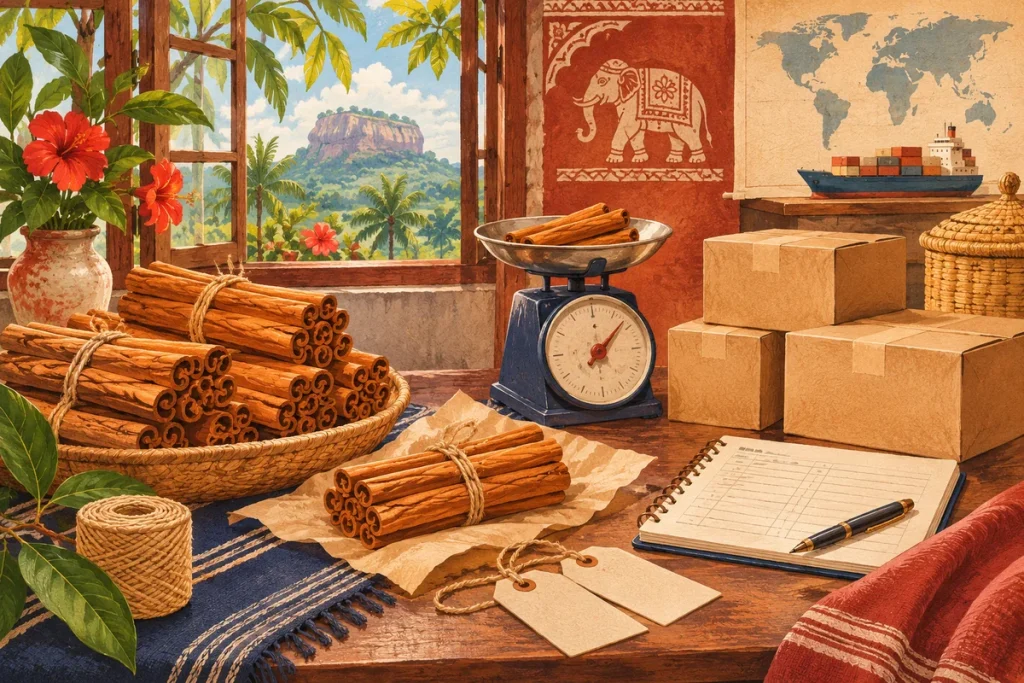
The first thing a customer handles is often the packaging. For a small Sri Lankan producer selling crafts, household goods or agricultural products, that outer layer has to do more than look attractive. It must suit the item, the journey and the way the customer will use it.
The International Trade Centre’s Packaging for SMEs programme treats packaging as a practical business capability. Its focus is useful because packaging decisions affect production and delivery as well as the appearance of a product on a shelf.
Start with protection
A fragile item and a flexible textile do not need the same package. Begin by listing what could damage the product during normal handling: movement inside a box, pressure from stacking, or exposure during transport. The outer container and any internal support should address the relevant problem.
Test a small sample before committing to a large order. Pack the actual product, handle the parcel as it would be handled in the delivery process, and ask someone unfamiliar with it to open and repack it. This can reveal awkward closures, unnecessary empty space or unclear instructions.
Make the information easy to find
A readable product name and a clear description help a customer identify what is inside. If sizes or variants are similar, make their differences obvious. Keep the main information in a consistent position so that staff can also locate it quickly when packing orders.
Any required labelling should be checked against the rules for the particular product and destination. Attractive artwork is not a substitute for that review, and broad claims about sustainability or quality should be supported by evidence.
Count the whole process
The price of a box is only part of the decision. Consider storage space, packing time, damaged items and the amount of material the customer must dispose of. A package that is slightly simpler may be easier to assemble accurately when orders increase.
Small improvements are often more useful than a complete redesign. A clearer variant label, a better-fitting insert or an opening that does not damage the contents can solve a real problem. Good packaging helps the product arrive in usable condition and explains it without requiring the customer to guess.