
Why Sinharaja Matters Beyond Its Tree Cover

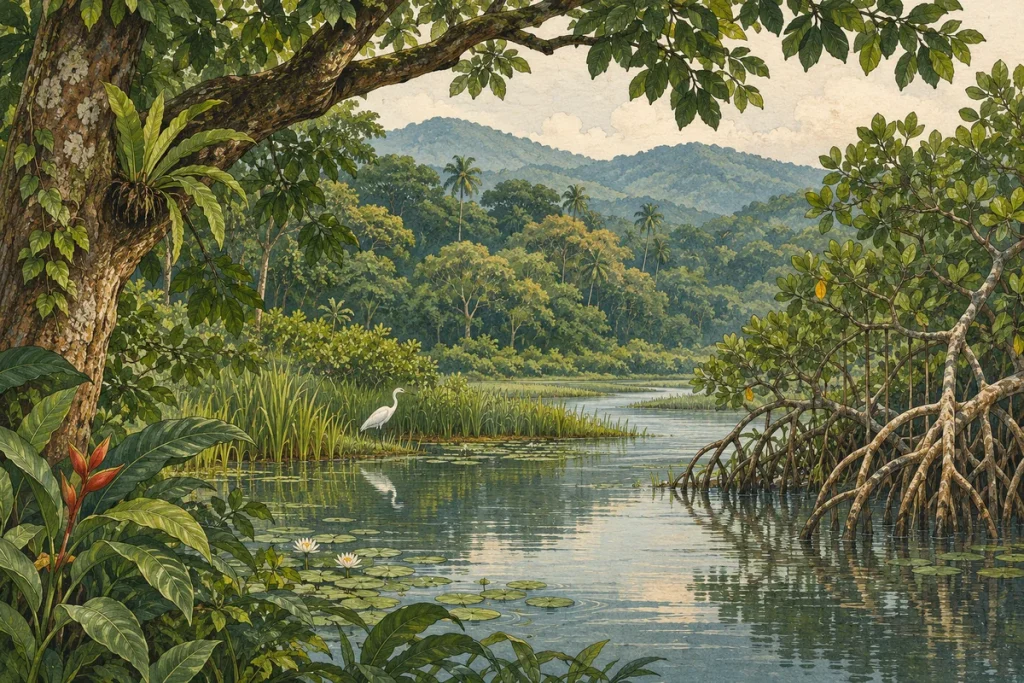
A rainforest is more than a large collection of trees. Its character comes from the relationships between vegetation, water, soil and wildlife, including life that a casual visitor may never notice. Sinharaja offers an important Sri Lankan example of why those relationships matter.
UNESCO describes Sinharaja Forest Reserve as a tropical rainforest in south-west Sri Lanka with exceptional endemic biodiversity. Endemic species are associated with a particular geographical area, making the condition of their habitat especially significant.
Notice the layers
From a permitted trail, a forest can be observed at several levels. Tall trees shape the canopy, while smaller plants occupy spaces below. Fallen material, roots and small watercourses are part of the same setting, even when they receive less attention than a bird or a large tree.
This is one reason a visit benefits from patience. Stopping quietly in a suitable place can reveal movement and sound that are easily missed while walking quickly. A guide can help interpret what is being observed without the visitor needing to disturb it.
A sighting is not a checklist guarantee
Wildlife does not appear on demand. Planning a forest visit around one promised photograph can encourage unnecessary noise, crowding or attempts to approach animals. A more realistic aim is to understand the habitat and appreciate whatever can be observed responsibly.
Visitors should follow current entry arrangements and guidance from the responsible authorities. Stay on approved routes, avoid collecting natural material and keep food and waste under control. Any specialist activity should be checked in advance rather than assumed to be permitted.
Think beyond the boundary
The importance of a forest is not captured entirely by its appearance from a viewpoint. The surrounding landscape, water connections and pressures at its edges help shape the wider conservation picture. A protected name on a map is a starting point for care, not the end of the work.
Sinharaja is therefore worth understanding as a living system rather than a backdrop for a short excursion. The most valuable impression may be the complexity of an apparently quiet place: many forms of life sharing a habitat whose details become clearer the longer one pays attention.