Public Trust Becomes Key Challenge for Sri Lanka’s Reform Government

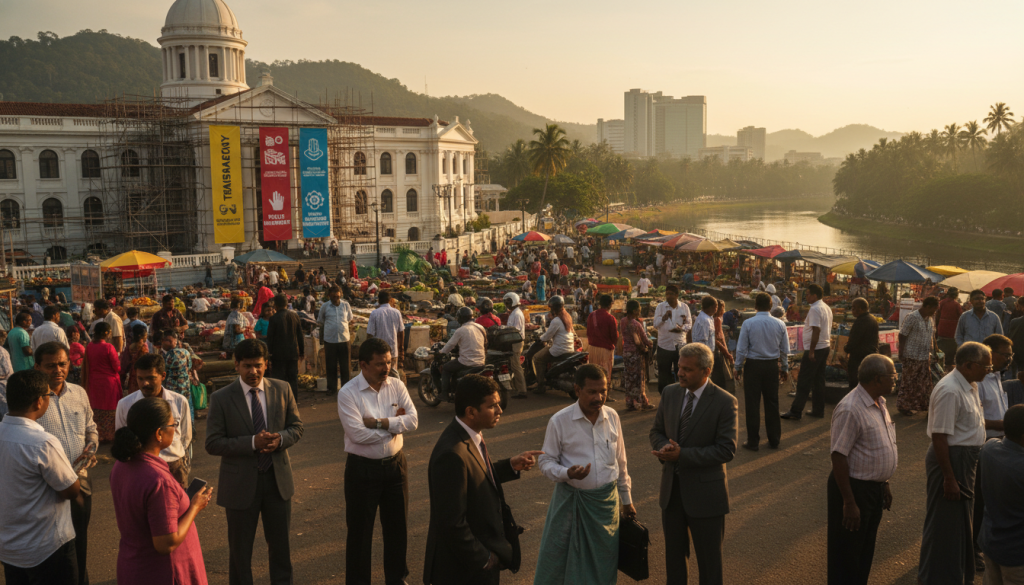
The island nation stands at a critical crossroads. Following a severe economic collapse and a significant political shift, the current administration has embarked on an ambitious agenda.
This path of transformation faces a fundamental hurdle: widespread public skepticism. Years of historical conflict, economic mismanagement, and unmet promises have created a deep credibility deficit.
Citizens now view institutions, from the media to economic bodies, with caution. This eroded confidence threatens the sustainability of any recovery program.
For the reform process to succeed, it requires more than technical policy fixes. It needs the active cooperation and faith of the people. Trust acts as the essential glue connecting effective governance to social stability.
The impact of this deficit is felt across South Asia and within every Sri Lankan community. Rebuilding it demands a multi-faceted approach.
This includes ensuring integrity among public officials, delivering economic equity, and fostering national reconciliation. The challenge is systemic, requiring concerted action from all parts of the state and public service.
Sri Lanka at a Crossroads: Reforms Amid a Legacy of Distrust
Sri Lanka’s current reform agenda is navigating a complex landscape shaped by decades of unresolved conflict and institutional erosion. This legacy directly influences how citizens perceive new policies and their implementers.
The shadow of the civil war continues to affect national cohesion. Unresolved political questions from that period fuel inter-community suspicion. This hinders the formation of a unified vision for the country’s future.
State institutions face a significant credibility problem. The police and judiciary are often viewed with caution by ordinary people. Perceived politicization and a lack of accountability have damaged their standing.
Past administrations attempted various changes. Figures like Prime Minister Ranil Wickremesinghe initiated modernization efforts in earlier terms. However, translating these technical reforms into tangible public confidence proved difficult.
Civil society plays a dual role in this environment. It acts as a critical watchdog, monitoring the government‘s actions. Simultaneously, it can serve as a bridge, conveying citizen concerns to the state.
The administration now faces competing pressures. Implementing difficult economic stabilization policies is essential. Yet ensuring social protection for vulnerable groups remains equally crucial. Balancing these demands tests the governance capacity of the entire public sector.
This “legacy of distrust” is multi-layered. It encompasses unresolved ethnic relations, accumulated economic grievances, and repeated governance failures. Each layer complicates efforts to build a national consensus.
International partners recognize the scale of this undertaking. Recent engagement, such as Japan’s acknowledgment of economic recovery steps, provides external validation. It highlights the importance of sustained reform for long-term development.
The present moment represents a decisive juncture rather than mere crisis. Choices made now will determine the trajectory of Sri Lankan economic development for years. The need for policies seen as legitimate across all levels of society is paramount.
Success requires more than legislation. It demands demonstrating consistent independence in institutional work. Fair application of rules and transparent information flow are fundamental. Only then can the deep-seated skepticism begin to recede.
Why Public Trust is the Linchpin for Sustainable Recovery
Sustainable recovery hinges on a factor often overlooked in technical policy blueprints: the reservoir of social trust. Without this foundation, even the most well-designed economic and governance reforms risk failure.
Trust functions as the essential linchpin. It directly lowers economic transaction costs. When citizens believe in the system, they engage more readily in commerce and investment.
This belief also fosters compliance with tax policy. People are more willing to contribute when they see funds managed fairly for public benefit. A cooperative social environment emerges, attracting long-term capital.
Distrust has the opposite impact. It encourages evasion and resistance to official measures. The effective implementation of human rights and rule of law frameworks depends on citizen buy-in.
International reports consistently link high social trust to successful development outcomes. Nations that rebuilt this capital after crises achieved more stable growth. Their experience offers a relevant lesson.
A lack of confidence undermines support for essential, yet painful, adjustments. Changes to state-owned enterprises or subsidy reductions meet fierce resistance if the government lacks credibility.
Independent institutions play a critical role in generating trust. Bodies ensuring accountability and conducting transparent reviews demonstrate that rules apply equally. This builds institutional legitimacy.
The level of trust also affects everyday working conditions. For public service employees and private sector staff, a fair environment boosts productivity and ethical conduct.
Therefore, rebuilding confidence is not just a communication task. It requires demonstrable changes in how power is exercised. Resources must be allocated transparently to benefit all groups in society.
For Sri Lanka, this process is a measurable component of social capital. The nation’s recovery trajectory depends on it. The people‘s belief in a fair process is the true engine of lasting progress.
The Credibility Crisis: A Media Sector in Need of Overhaul
A comprehensive assessment of Sri Lanka’s media landscape reveals a sector grappling with a deep-seated credibility crisis. This environment hinders informed public discourse and weakens the foundation for national recovery.
An extensive 14-month study by International Media Support (IMS) concluded that wide-ranging reforms are urgently needed. The report utilized UNESCO’s Media Development Indicator Framework for its analysis.
It found that public confidence in traditional news outlets has been significantly eroded. Younger audiences, in particular, are turning to web-based and social media for information.
The IMS assessment produced 101 detailed recommendations. These proposals aim to rebuild the media sector into a pillar of accountability and reliable information.
Some positive steps have been taken since 2015. Authorities reopened investigations into attacks on journalists. They also ended the illegal blocking of websites.
Constitutional recognition of access to information via the 19th Amendment was a key advance. These actions helped improve the nation’s World Press Freedom Index ranking from 165 to 141.
Rebuilding Trust Through Law and Policy Review
A central recommendation calls for a thorough review of all laws restricting freedom of expression. This review must ensure compliance with international human rights norms.
The outdated Press Council Act of 1973 is a primary target for repeal. The state-controlled Press Council should be abolished. It should be replaced with effective industry self-regulation.
Effectively implementing the Right to Information (RTI) law is another critical step. This law empowers people to seek data from public officials and institutions.
New broadcast legislation is also necessary. It should establish transparent licensing processes. An independent Broadcasting Authority would oversee this system.
Mandating transparent disclosure of media ownership is essential. The public has a right to know who controls the news they consume.
Transforming State Media into Public Service Broadcasters
The report advocates for a fundamental shift in the role of state-owned outlets. Sri Lanka’s three state broadcasters should become genuine public service broadcasters.
This transformation requires guaranteed editorial independence. Their work should serve all groups in society, not just the ruling government.
The state-owned newspaper entity, Lake House, must operate with the same editorial freedom. Its management should be shielded from political interference.
These changes would help stop prior censorship. They would also end the blocking of websites that contravene constitutional freedoms.
Respecting privacy and limiting state surveillance of journalists are further key demands. A free press cannot function under constant watch.
Addressing Low Wages and Ethical Lapses in Journalism
The assessment identified low wages as a systemic vulnerability. Poor pay leaves journalists economically insecure and open to coercion.
This financial pressure can lead to ethical lapses and sensationalism. Such practices further damage the profession’s credibility with the public.
Updating journalism education curricula is a proposed solution. Better training can instill stronger ethical standards from the start.
Creating a national media literacy policy is another recommendation. It would help citizens critically evaluate the information they encounter.
These reforms are not just internal industry matters. They are fundamental to creating a transparent environment where government accountability can be scrutinized.
A mistrusted media cannot effectively act as a watchdog. It also fails as a reliable channel for vital public information. Fixing this sector is a direct investment in the nation’s democratic health.
Stabilization is Not Enough: The Economic Trust Deficit
Beyond the charts showing stabilized inflation and reserves lies a critical, unmeasured gap: the public’s belief in the economic plan. Macroeconomic stability is a necessary first step, but it has not healed the underlying economic trust deficit.
Citizens now question the fairness and long-term viability of the recovery. This skepticism threatens to undermine even technically sound policies.
The Looming Challenge of Post-IMF Debt Repayments
A major test awaits in 2028. This is when the nation must begin repayments to the Official Creditor Committee (OCC). Managing these foreign currency outflows will be a severe challenge.
The government must significantly expand foreign currency inflows before that date. Achieving strong, sustained growth is non-negotiable. Failure risks triggering another economic crisis.
This timeline underscores the necessity of a follow-up International Monetary Fund program. Abandoning a pragmatic policy approach after the current program ends could be disastrous. Expert analysis highlights this risk.
Consistent execution is vital for maintaining international confidence. It also builds domestic faith in the system. The 2028 repayment cliff is more than a fiscal date. It is a referendum on economic planning.
The Unfinished Business of State-Owned Enterprise Reform
The persistent drag of unprofitable state-owned enterprises (SOEs) remains a heavy burden. Entities like Sri Lankan Airlines continue to strain public finances.
Transparent privatization or restructuring of these sector giants is overdue. An economic emergency could provide the political will for rational action. Such reforms would signal a serious commitment to fiscal discipline.
The slow pace of SOE change undermines confidence. It fuels doubt about the state‘s dedication to systemic improvement. Citizens see these entities as symbols of waste and political patronage.
Addressing them is not just an accounting exercise. It is a direct investment in governance credibility. Fair and open processes are essential to avoid the pitfalls of past sell-offs.
Ensuring an Equitable Recovery to Prevent Social Unrest
An economic rebound perceived as benefiting only elites will fail. It would inevitably fuel the kind of social unrest and protest seen in recent years.
Equity must be a core design principle of the recovery. The International Monetary Fund has a role here. It should ensure transparency about its conditions.
It must also advocate for social protection measures to shield vulnerable groups. Maintaining public support for necessary austerity depends on this perceived fairness.
Perceived inequity can quickly derail stabilization programs. It fractures the social consensus needed for long-term development. Therefore, economic trust is inextricably linked to political stability.
Rebuilding this confidence requires demonstrating that growth reaches all levels of society. The impact of policies on everyday working people must be clear and positive.
Governance Reforms: Between Promise and Practical Implementation
The credibility of a political system is tested at the point of policy delivery. Ambitious pledges made during elections often meet the hard reality of a complex bureaucracy.
This gap between design and execution defines the challenge of governance reforms. Converting paper plans into tangible improvements requires more than political will.
It demands technical capacity, consistent messaging, and insulated institutions. Without these, even the best-intentioned policies can falter, deepening public skepticism.
Strengthening the Rule of Law and Judicial Independence
A fair and independent legal system is the bedrock of citizen confidence. Recent election promises highlighted this priority.
Parties like the NPP pledged to repeal restrictive laws. These include the Online Safety Act and the Prevention of Terrorism Act (PTA). Amending the ICCPR Act was also promised.
Following through on these commitments is crucial. It signals a genuine shift away from using law as a tool of political power.
Another critical step is ensuring the Public Prosecutor’s Office operates with robust independence. It must be insulated from political pressure to function effectively.
This independence affects everything from major investment contracts to a citizen’s sense of justice. When the police and courts are seen as fair, it strengthens the entire governance framework.
Accountability for past corruption must be pursued diligently. Preventing such acts in the present is equally vital. This two-pronged approach is essential for restoring institutional legitimacy.
The Gap Between Policy Design and Effective Execution
A visible chasm often exists between a well-crafted policy document and its real-world impact. In Sri Lanka, this failure is a recurring theme.
Analysts note that reforms frequently stumble during implementation. Causes include poor coordination across government agencies and a lack of technical capacity.
Sometimes, political will evaporates when facing vested interests. The result is a state of perpetual planning with little concrete change.
Inconsistent official messaging worsens this problem. It creates uncertainty among citizens and potential investors. They cannot rely on a stable policy environment.
Bridging this gap requires professional expertise within the public sector. Engaging with technical experts and the skilled diaspora can boost this capacity.
It is a process that demands patience and systematic work. The role of mid-level officials in driving change is often underestimated.
The Critical Role of Transparent Communication
Governments must do more than enact reforms. They must consistently and clearly explain the “why” and “how” to the people.
Transparent communication manages public expectations. It involves sharing both progress and setbacks openly. This honesty can build credibility over time.
When a government fails to communicate, rumors and misinformation fill the void. This erodes the support needed for difficult but necessary measures.
A clear communications strategy is a practical governance tool. It should detail the rationale behind complex economic adjustments. It must also outline the social protection measures for vulnerable groups.
Providing accessible information empowers citizens. It turns them from passive observers into informed participants in the national recovery process.
Ultimately, closing the implementation gap is the true test. Without it, governance reforms remain theoretical exercises. They fail to contribute to the trust-building essential for Sri Lanka‘s future.
The Unavoidable Core: National Reconciliation and Power Sharing
At the heart of Sri Lanka‘s enduring political challenges lies a single, unresolved issue. It predates the recent economic crisis. Sustainable societal reconciliation is a non-negotiable prerequisite for lasting peace and stability.
This process goes beyond political statements. It requires building trust across all communities. The government must establish credible accountability and truth-seeking mechanisms.
Ignoring this core issue perpetuates a cycle of grievance. It undermines the state‘s ability to be seen as fair by all people. Genuine reconciliation is a complex governance challenge essential for the nation’s future.
The Historical Weight of the Unresolved Tamil Question
The unresolved Tamil question sits at the center of the nation’s political crisis. Its roots stretch back decades, long before the civil war ended.
Successive administrations have avoided a substantive political settlement. This avoidance has deepened mistrust among Tamil communities. It reinforced perceptions of exclusion and second-class citizenship.
Demands for meaningful devolution and identity recognition are persistent. They are not new claims. These demands have shaped Sri Lankan politics for generations.
Analysts argue that ignoring this history is a continuation of failed policy. It leaves a festering wound that prevents full national healing. The legacy of conflict affects inter-community relations at every level of society.
Moving Beyond Symbolism to Meaningful Devolution
Progress requires moving past symbolic gestures. A political consensus on granting greater regional autonomy is needed. This is especially true for the Northern and Eastern Provinces.
Meaningful devolution involves transferring real power in governance and resource management. A crafted model should support local economic development. It can unlock the potential of regions held back by conflict.
Such a model must also include strong constitutional safeguards. These safeguards are crucial to address fears within the Sinhala-majority community. They provide assurance against secessionist movements.
The role of local institutions becomes vital under devolution. Empowering regional officials can improve service delivery. It brings government closer to the people.
This process is not about weakening the central state. It is about creating a more efficient and responsive system. Fair resource sharing is a key component of any successful agreement.
Building a Common National Identity Amid Diversity
The final piece is fostering a shared sense of Sri Lankan citizenship. This must coexist with respect for distinct ethnic, linguistic, and religious identities.
The balance is delicate. A common national identity cannot be imposed. It must be built through inclusive policies and equal treatment under the law.
Education and media have a critical role to play. They can promote narratives of unity rather than division. Respecting all groups’ human rights is the foundation.
Failure to achieve this balance has real costs. It perpetuates instability and deters investment. Regions mired in unresolved conflict cannot fully contribute to national growth.
Ultimately, reconciliation is directly tied to economic potential. A nation divided cannot harness the full talents of all its citizens. Building a common identity is an investment in the country’s collective future.
Countering the Critique: Is Reform Detached from Political Reality?
Critics contend that the blueprint for change ignores the foundational issues of ethnic tension and institutional decay that define Sri Lanka‘s context. A persistent argument suggests reform discussions occur in an academic vacuum. They are seen as disconnected from the gritty realities of the nation’s political and social landscape.
This critique holds that any agenda failing to account for deep-seated mistrust and historical conflict is destined to falter. The state must ground its ambitions in the actual conditions faced by its people. Without this connection, even well-intentioned policies lack the legitimacy required for success.
Engaging with this perspective is not about dismissing reform efforts. It is about ensuring they are realistic and responsive. The process must be seen as relevant to everyday struggles and long-standing divisions.
The Misleading Allure of the Singapore and China Models
Comparisons to the rapid development of Singapore or China are common in Sri Lankan political discourse. These analogies, however, often overlook fundamental differences in political systems and social cohesion.
Singapore benefited from a cohesive national identity and a highly centralized power structure. China operates under a single-party system with immense state capacity to enforce its policies. Sri Lanka presents a stark contrast.
It is a multi-ethnic society still shaped by the legacy of a prolonged civil war. Its democratic environment is competitive, with shifting alliances and coalition politics. Direct replication of foreign models is both impossible and unproductive.
Seeking imported solutions avoids the harder work of designing context-specific reforms. It reflects a wish for a simple fix rather than engaging with complex local realities. The role of democratic institutions and human rights obligations cannot be sidelined.
Figures like former Prime Minister Ranil Wickremesinghe have sometimes invoked such models. Yet the governance challenges in South Asia are unique. Sustainable change must emerge from within, not from borrowed blueprints.
Why Time Alone is Not a Solution for Systemic Change
A common defense of slow progress is the argument that reforms simply need more time. Historical evidence, however, counters this notion. Many administrations have had lengthy tenures yet failed to deliver transformative change.
The central constraint is not time but political will. Courage to address core issues like ethnic power-sharing and elite capture of the economy is often lacking. This pattern of political avoidance has perpetuated crisis rather than resolved it.
For instance, successive governments have had opportunities to settle the Tamil question. Delays have only deepened mistrust. The same applies to overhauling inefficient state-owned enterprises or the police system.
Building trust requires demonstrated action, not the passage of years. Transparency and accountability are the true catalysts. A report or review alone does not change conditions on the ground.
Citizens judge the government by tangible improvements in their lives. They assess the fairness of the process and the conduct of public officials. When avoidance continues, skepticism hardens.
Therefore, the reform agenda must be rooted in political realism. It should prioritize steps that build confidence across all groups. This approach is the only way to gain the broad support needed for lasting success.
Listening as a Policy Tool: Engaging Civil Society and the Diaspora
Transforming the relationship between the state and its people demands a new operational principle: structured listening. This is not a soft courtesy but a hard policy tool. It is essential for designing reforms that are both effective and seen as legitimate.
In this context, listening means structured, inclusive engagement. It involves a wide range of stakeholders. These include civil society organizations, community leaders, professional groups, and the global Sri Lankan diaspora.
Such engagement provides policymakers with vital ground-level intelligence. It reveals the potential real-world impact of proposed policies. It also highlights practical obstacles long before implementation begins.
Civil society acts as a critical repository of localized knowledge. These groups often have a direct connection to marginalized voices. These voices are frequently absent from formal political discourse in Colombo.
Their role is to convey the lived experiences of different communities. This information is invaluable for crafting policies that work for everyone. Ignoring these insights creates a dangerous distance between the governing system and the governed.
The Sri Lankan diaspora represents another untapped resource. This global community possesses significant expertise, capital, and international networks. Constructive engagement could harness these assets for national development.
A government seen as genuinely listening builds a different kind of credibility. It is more likely to be trusted, even when its final decisions are unpopular. The process itself is perceived as fair and consultative.
This perception directly reduces public resistance to difficult changes. It enhances the legitimacy of the decision-making system. Citizens feel they have been heard, which builds essential support.
Tokenistic consultation must be avoided. Public forums where feedback is collected but then ignored are counterproductive. They can deepen cynicism rather than build trust.
For engagement to be meaningful, feedback must visibly influence policy design and implementation. This could mean adjusting timelines, adding safeguards, or even shelving flawed plans. Demonstrating this responsiveness is key.
This approach is a direct investment in rebuilding the social contract. It signals that citizens have a real stake in national outcomes. It shifts the dynamic from a top-down imposition to a collaborative process.
Ultimately, treating listening as a core governance function is a pragmatic strategy. It improves policy outcomes by incorporating diverse intelligence. It also mitigates social conflict by ensuring all groups feel included in the nation’s recovery journey.
From Centralized Control to Decentralized Economic Potential
For decades, economic planning in Sri Lanka has operated from a single, distant hub. This hyper-centralized model has left vast regional potential untapped.
Growth concentrated in Colombo has stifled local initiative elsewhere. It has also led to deeply imbalanced development across the island.
This imbalance fuels regional grievances and distrust. Unlocking national potential requires a shift. The nation needs multiple economic engines, not just one.
Unlocking the Northern and Eastern Provinces’ Economic Capacity
Years of conflict and centralized neglect have left specific regions behind. The Northern and Eastern Provinces hold significant latent capacity.
Their strengths are clear in key sectors. These include fisheries, agriculture, and renewable energy. Tourism and logistics also offer major opportunities.
Realizing this potential requires local communities to have real power. They need authority over resources and investment decisions. This connects directly to political devolution.
An economy cannot be decentralized while power remains centralized. Local officials must drive their own economic development. This builds local accountability and support.
Common concerns about decentralization exist. Fears include capacity constraints and local corruption. These are challenges to manage, not reasons to maintain central control.
Building local institutions is part of the process. It requires training and a clear policy framework. The central state must provide guidance, not micromanagement.
Decentralizing economic control fosters healthy competition among provinces. It can spur innovation and create several growth engines. This makes the national economy more resilient.
Integrating all regions as active contributors is essential. It builds a shared sense of national progress. This practical step is vital for equitable and sustainable growth in Sri Lanka.
Climate Change: An Emerging Threat to Stability and Public Confidence
Beyond political and economic debates, a slow-moving crisis is reshaping the island’s physical and social landscape. Climate change represents a non-traditional but rapidly intensifying threat. It directly intersects with Sri Lanka‘s core challenges of maintaining stability and citizen confidence.
Extreme weather events are now more frequent and severe. Rising sea levels threaten coastal communities. Changing rainfall patterns disrupt traditional agriculture.
These environmental shifts directly impact livelihoods. Vulnerable groups, including farmers and fisherfolk, face the greatest risks. The capacity of the state to respond is under constant test.
Ineffective or inequitable disaster response can cause severe damage. It erodes belief in the government‘s ability to provide basic security. Public confidence is fragile after years of other crises.
Proactive measures are essential, as highlighted by analysts. Mitigation involves reducing greenhouse gas emissions. Adaptation means building societal and infrastructural resilience.
Climate stress is also linked to potential social unrest. Competition for diminishing resources like water and arable land can grow. This competition may exacerbate existing ethnic or political tensions.
Integrating climate action into national planning is critical. It is not just an environmental issue. It is a core component of long-term economic stability and social trust.
The government must treat this as a central policy priority. A coherent national strategy requires input from many sectors. This includes energy, transportation, water management, and agriculture.
Transparent communication about climate risks is vital. Clear preparedness plans help manage public expectations. They can prevent panic and misinformation during a crisis.
This objective analysis presents climate change as a factual, measurable risk. It demands immediate and sustained attention from public officials. The role of scientific institutions in guiding this process is key.
Climate resilience is becoming a new dimension of the social contract. Citizens increasingly expect the state to safeguard them against this growing threat. Meeting this expectation is fundamental for the government‘s legitimacy.
Failure to act could unravel progress in other areas. Economic development projects may be washed away by floods. Social protection systems will be overwhelmed by climate-induced displacement.
Therefore, addressing this challenge is inseparable from broader governance reforms. It requires a system that is responsive, fair, and transparent. The future stability of Sri Lankan society may well depend on it.
The International Community’s Role: Support Without Imposition
Global institutions and bilateral partners stand ready to assist, but the manner of their engagement determines its ultimate effectiveness. For a nation navigating recovery, this external relationship is a delicate dance. It requires balancing necessary aid with respect for sovereign decision-making.
Groups like International Media Support (IMS) exemplify this approach. Their extensive report on the media sector concludes that implementation is up to local actors. This includes the government, civil society, businesses, and academia.
IMS offers its assistance but stresses that the primary responsibility lies within Sri Lanka. This principle of local ownership is crucial for sustainable change. External help should reinforce, not replace, domestic capacity.
Multilateral financial bodies play an even more direct role. The International Monetary Fund’s program provides essential stability. Yet its conditions must be designed and communicated with great care.
Transparency about these conditions is non-negotiable. It ensures vulnerable communities are protected during difficult adjustments. The government must clearly explain the rationale behind complex policy shifts.
Perceived imposition of external agendas carries significant risk. Nationalist elements can exploit this to undermine reforms. They may portray the state as lacking independence, eroding its credibility.
Therefore, international support must align with domestically-driven priorities. It should strengthen local institutions rather than creating parallel structures. This builds long-term governance capacity.
Effective engagement follows several key principles:
- Technical expertise shared upon request, not mandated.
- Diplomatic encouragement that respects political processes.
- Financial aid tied to accountability and equitable outcomes.
- Advocacy for international human rights standards through dialogue.
This approach is evident in constructive bilateral relationships. For instance, Japan has acknowledged the island’s economic recovery steps. Such partnerships are based on mutual interest and respect.
Similarly, domestic policy moves, like the consideration of a VAT rate reduction, signal locally-led economic strategy. International partners can back these initiatives without dictating them.
The ideal role is one of “support without imposition.” It enables Sri Lankan stakeholders to lead their own recovery. This fosters a sense of national agency and pride.
Ultimately, the international community’s impact hinges on this subtlety. Its power should empower, not overshadow. For Sri Lanka, a collaborative global partnership is a cornerstone of a stable future in South Asia.
Measuring Progress: Key Indicators of Restored Public Trust
Moving from promises to proof, a dashboard of key metrics offers a transparent way to track national recovery. Concrete indicators move the discussion beyond political rhetoric. They allow citizens and analysts to gauge whether confidence in the system is genuinely being restored.
This measurement shifts focus from abstract policy wins to observable changes in behavior and institutional performance. Trust is not just a feeling. It is an outcome that can be assessed through data.
A practical framework should include several categories of indicators. These range from international rankings to everyday social interactions.
Quantitative metrics provide an external benchmark. Improvements in Sri Lanka‘s position on global indices signal progress to the world.
Key indices include the World Press Freedom Index and the Corruption Perceptions Index. A better score in the Ease of Doing Business rankings would also be a positive sign.
These numbers matter because they influence investment decisions and international support. They reflect the level of governance and institutional independence.
Qualitative and behavioral indicators reveal how people act within the society. A reduction in the frequency and scale of public protests is one clear signal.
Increased voluntary tax compliance demonstrates belief in fiscal fairness. More positive sentiment in media analysis and social media discourse would also be telling.
These changes show that citizens are engaging with the state cooperatively. They reflect a growing belief that the process is fair.
Institutional indicators track the establishment and active use of independent bodies. The creation of a functional Broadcasting Authority would be a major step.
So would a robust Right to Information Commission handling many public requests. The effective review of restrictive laws by an independent body is another key metric.
These bodies must be seen as working without political interference. Their active role is central to accountability.
Social cohesion indicators measure healing within the Sri Lankan community. An increase in cross-community economic partnerships is a powerful sign.
Positive shifts in public opinion surveys regarding inter-ethnic trust are equally important. These reflect a reduction in the grievances that fuel division.
Progress must be visible and communicable to the public. Abstract reforms mean little if they don’t translate into perceived improvements in daily life.
Citizens judge the government by tangible results. Can they access services from public service officials more easily? Do they feel the police and courts apply the law fairly?
Therefore, the government itself should transparently track and report on this dashboard. Publishing regular updates would be a powerful form of accountability to its citizens.
This data-oriented approach frames the recovery in practical terms. It provides a clear framework to evaluate official claims. For Sri Lanka, measurable progress is the foundation of renewed confidence.
The Path Forward: Aligning Political Courage with Public Expectation
Achieving lasting stability demands a deliberate alignment of leadership courage with citizen expectations. The nation’s path forward hinges on this essential synergy.
Technical solutions in media law, economic restructuring, and governance are well-documented. Their implementation, however, requires overcoming entrenched political obstacles and vested interests.
Citizens expect not overnight miracles, but consistent, transparent, and equitable action on the core issues outlined. This calls for a new social compact.
As independent analysis concludes, the island needs clarity, commitment, and courage—not just the passage of time. This translates to a multi-sectoral approach: credible media, fair economics, just governance, and genuine reconciliation.
All political actors must rise above short-term calculations for national recovery. With the right choices, a future built on renewed confidence is possible. The country’s trajectory depends on this alignment today.