Ministerial Resignation Raises Questions Over Political Accountability

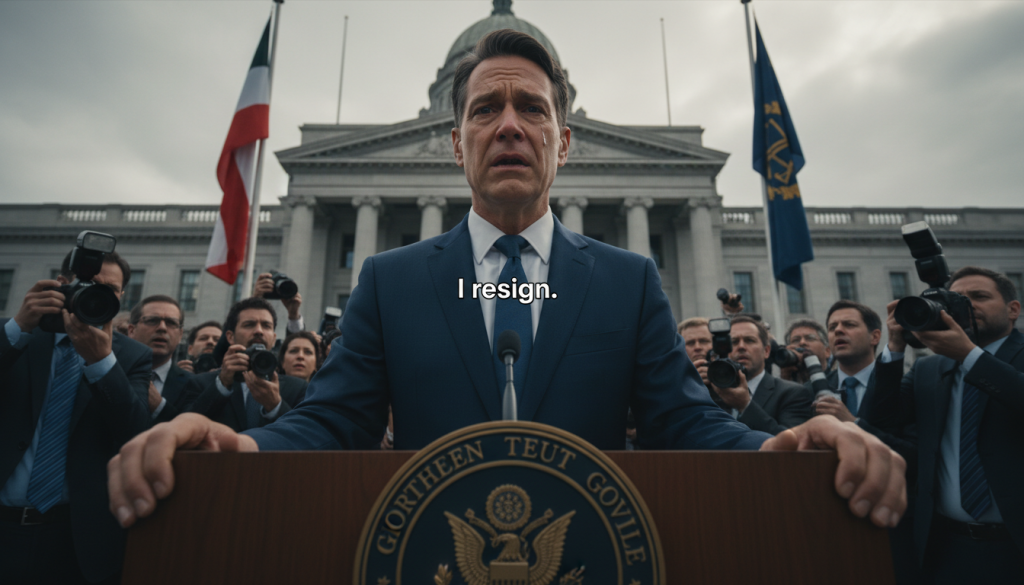
A recent event in Sri Lanka has captured national attention. A senior cabinet member stepped down from their post. This move is not just a simple personnel change.
It points to deeper issues within the nation’s governance system. Such events test the unwritten rules that are supposed to guide those in power. They make us look at how the government is supposed to answer for its actions.
This article examines what happens when an official leaves office under pressure. It asks if old traditions of ministerial responsibility still work today. The focus is on Sri Lanka, but the ideas matter for democracies everywhere.
There is often a gap between what people expect and what leaders do. Citizens want clarity and honesty from their ministers. This piece will break down the key ideas, look at the local case, and draw wider lessons.
The goal is to inform readers about how accountability functions in practice. It is a matter of significant public interest for all Sri Lankans.
The Triggering Event: A Resignation That Echoes Beyond the Cabinet
Allegations of financial misconduct created a chain reaction, culminating in a cabinet member’s exit. This event became the flashpoint for a national conversation. It forced a close look at the rules governing public service.
The sequence began in Parliament. Opposition MP Dayasiri Jayasekera leveled serious claims. He focused on a transfer of about USD 2.5 million from state funds.
Contextualizing the Resignation in Sri Lanka’s Political Timeline
The core allegations were specific. MP Jayasekera stated the Treasury transfer may have violated constitutional articles. These articles give Parliament control over public finance.
He sought to raise a formal question of privilege against a senior official. This parliamentary procedure is a key tool for holding officials to account. The Speaker of Parliament, however, did not allow the issue to be raised.
That decision became a major point of conflict. It led the opposition MP to take an unusual step. He petitioned the Inter-Parliamentary Union (IPU).
The petition argues the Speaker’s move deprived the opposition of its rights. This attempt to seek international oversight highlights the depth of the dispute. It shows how domestic political mechanisms were seen as failing.
This incident fits a pattern in recent Sri Lankan history. Allegations concerning state funds have surfaced before. The official response to this particular matter was closely watched.
Immediate Public and Media Reaction
News of the resignation and the events leading to it spread quickly. The public reaction was one of intense scrutiny. Citizens and commentators demanded clear answers.
Local media coverage was extensive. Reports dissected the financial allegations and the parliamentary standoff. Editorials questioned the health of the nation’s accountability systems.
The government’s position emphasized proper parliamentary process. It noted the Speaker’s authority in such procedures. The opposition framed the event as a suppression of legitimate oversight.
This clear factual sequence is crucial. It did not just lead to one minister leaving their post. It triggered a much wider and necessary debate on how power is checked.
The event tests whether traditional mechanisms for enforcing responsibility still function. It sets the stage for a deeper examination of what true ministerial duty requires.
Ministerial Resignation Raises Questions Over Political Accountability: Defining the Terms
The concept of ministerial responsibility forms the bedrock of democratic accountability. It is a core principle that dictates how power is managed within a government. This section breaks down its key parts.
We will look at its legal foundations and its unwritten rules. The goal is to clarify what is expected from those in charge.
Constitutional Responsibility vs. Political Convention
There is a key difference between law and convention. Constitutional responsibility refers to the legal duties of a minister. These are often written in a nation’s supreme law.
Political convention is different. It is an unwritten rule based on tradition and practice. For ministers, this convention demands they answer for their department’s actions.
Even if they did not directly order a mistake, the convention holds them ultimately responsible. This creates a chain of accountability that links the bureaucracy to the public.
The Historical Ideal: The Minister as the Accountable Face of the State
This idea has deep roots. It started in systems with monarchs. Ministers acted as responsible proxies, shielding the crown from blame.
The convention evolved. Today, a minister is seen as the accountable face of their department. Their role is to accept ultimate responsibility for everything that happens under their watch.
This ideal makes them the essential link. They connect the permanent administration to the elected parliament. Constitutional traditionalists view this as vital for a functioning system.
It ensures someone answerable to the people is always in charge.
Moral Accountability and the Public Trust
Beyond legal duty lies a moral force. Public trust is the foundation. Officials are expected to act in the public interest, not for personal gain.
This moral accountability is what gives the convention its strength. When a minister resigns after a failure, it is often about upholding this trust. It signals that the political class respects the citizens it serves.
This traditional ideal is now under strain in many democracies. The gap between principle and practice is growing. Understanding this foundation is key to analyzing current events.
Sri Lanka’s Accountability Crossroads: A Case Study in Parliamentary Challenge
This case study centers on a blocked attempt to scrutinize a multi-million dollar state fund transfer. It reveals a tense struggle between parliamentary oversight and executive discretion.
The specific procedures and decisions involved offer a clear window into how the system works—or fails to work—in practice.
The Jayasekera Allegations: Scrutinizing Treasury and Parliamentary Procedure
Opposition MP Dayasiri Jayasekera’s privilege motion contained two main sets of allegations. They targeted both financial governance and personal eligibility.
The motion claimed a USD 2.5 million transfer from the Treasury violated constitutional articles. These articles give Parliament ultimate control over public finance.
It also raised questions under Article 91(1)(d)(xiii) of the constitution. This article deals with the eligibility of a person with dual citizenship to sit in Parliament.
The intended parliamentary tool was a “question of privilege.” This is a serious procedure defined by the Powers and Privileges Act and Standing Orders.
Its purpose is to address actions seen as obstructing Parliament or showing contempt for it. In this case, the allegations suggested a failure to report the transfer obstructed parliamentary oversight.
The Speaker’s Role and the Question of Opposition Rights
The Speaker of Parliament holds the key gatekeeping role for such motions. They have the discretion to allow or refuse a matter to be raised.
Here, the Speaker refused to allow the privilege motion. The official stance was that this followed proper procedure and respected the Speaker’s constitutional authority.
From the opposition’s perspective, this refusal was the core issue. They argued it systematically constrained their right to scrutinize the executive.
MP Jayasekera contended it limited free speech in Parliament on urgent public matters. This, he claimed, eroded transparency and accountability.
The debate highlights a classic tension. It pits the Speaker’s discretionary power against the opposition’s need for an effective check on the government.
Seeking International Oversight: The IPU Petition as a Symptom
The decision to petition the Inter-Parliamentary Union (IPU) was a significant escalation. It signals a perceived failure of domestic institutions to provide fair recourse.
The petition asks the IPU to examine if the Speaker’s refusal aligns with international democratic principles. It frames the issue as one of global parliamentary standards.
This move is itself a powerful symptom. It suggests the opposition party believes domestic channels for accountability are insufficient.
When lawmakers seek external review, it questions the self-correcting health of the parliamentary democracy itself.
This case, therefore, moves beyond a single financial matter. It becomes a concrete test of whether there are effective, trusted channels to hold powerful officials to account.
The Erosion of Public Trust: When Resignations Become Rarity
Over time, repeated controversies without decisive consequences wear down the public’s faith in governance. When an official steps down, it is often seen as a rare event. This growing rarity signals a deeper problem for the system’s health.
The societal impact is profound. A pattern of scandals with few tangible results erodes confidence in the entire structure. Citizens begin to question if the rules apply equally to everyone.
Citizen Perception in the Aftermath of Political Scandals
In the wake of a scandal, public perception hardens into cynicism. People see elaborate investigations and legal battles. Yet they often witness no clear outcome that delivers justice.
The perception is that stepping down on principle is now uncommon. Such actions seem reserved only for the most extreme personal conduct. This breeds disillusionment among ordinary people.
This sentiment is not just about one time. It is the cumulative effect of many such times over many years. Each event chips away at the belief that leaders are truly answerable.
Reflecting on Rabindranath Tagore’s ideal of a society “where the mind is without fear” highlights the gap. The poet envisioned breaking down “narrow domestic walls.” Today, many see political fragmentation and a lack of awareness among leaders.
This contrast frames what is being lost. It is the trust that leaders will act with guilt and responsibility for the public good.
The Gap Between Legal Procedure and Public Expectation
A major concern is the disconnect between process and result. The public expects swift, clear accountability for failures. What often occurs are protracted procedures, delays, or stonewalling.
Legal processes are necessary. However, when they become labyrinths with no exit, public faith suffers. People want to see a direct link between a mistake and a consequence.
The long-term effect of this erosion is serious. It can impact voter turnout and general civic engagement. Why participate if the system feels unresponsive?
It also challenges the legitimacy of any future government. If trust is broken, winning an election does not automatically restore it. The health of a democracy is measured not just by its laws.
It is measured by the trust citizens place in those who administer them. In Sri Lanka, the cumulative impact of recent crises has shortened public patience. Expectations for transparency and answerability are higher than ever.
A Global Trend: The “Convention of Ministerial Irresponsibility”
Around the world, a troubling pattern is reshaping how democracies hold their leaders to account. The classic idea that a cabinet member must answer for their department’s actions is weakening. This shift is not unique to any one nation.
It represents a broad change in political culture. Observers now speak of a new norm where avoiding blame is prioritized.
From Canada’s ArriveCan to the UK Precedents
Clear examples from other democracies illustrate this trend. In Canada, the ArriveCan scandal involved significant financial mismanagement. A mobile app project saw costs balloon with little oversight.
Despite public outcry, no minister offered their resignation. Commentator David Moscrop argued this showed the old principle was “dead and buried.”
In the United Kingdom, the pattern is even more defined. Academic Michael Gordon points to the premierships of Theresa May and Boris Johnson. He suggests the UK now lives with a “convention of ministerial irresponsibility.”
During various crises, ministers remained in post despite clear departmental failures. The decision to stay became the new standard.
The Shift from Departmental to Personal Culpability
The core change is in what triggers a resignation. The traditional model demanded responsibility for anything under a minister’s watch. Today, the focus has narrowed to personal fault.
The attitude is that blame should lie with the officials who acted, not the overseer. This severs a key link in the accountability chain. It protects politicians from errors made by a vast, complex bureaucracy.
For the public, this makes the system feel less answerable. A minister can distance themselves from any problem not directly tied to their own hand.
Political Survival vs. Constitutional Tradition
The driving force behind this shift is often raw political calculus. Ending a career for a bureaucratic misstep is now seen as an unreasonable sacrifice. The immense size of modern government departments is used as a justification.
Constitutional traditionalists see this as a serious affront. They argue it hollows out a fundamental democratic principle. When no one is ultimately answerable, public trust in the entire government erodes.
This global trend provides crucial context. It shows that challenges to ministerial responsibility are a modern governance dilemma. The political survival instinct often clashes with older, stricter traditions of duty.
Understanding this international backdrop helps analyze local examples. It suggests the pressures facing any ruling party are now common across democracies.
The Pressure Valve: When Do Ministers Actually Resign?
Today, a minister leaving office is less about constitutional duty and more about calculated damage control. The practical reality has shifted from principle to a political pressure valve. This system triggers a departure only under specific circumstances.
It operates on a clear calculus. The goal is to protect the government’s broader interests while managing public perception.
The Calculus of Personal Misconduct vs. Systemic Failure
The modern criteria for a resignation are narrow. A minister is most likely to step down in two circumstances. First, if they are directly implicated in personal ethical misconduct.
Second, if they knowingly ignored clear warnings about a problem in their department. Broad systemic failures within a ministry often do not trigger the same need for accountability.
The attitude is that blame should fall on the bureaucrats who acted. This protects the overseeing politician. It represents a major shift from the traditional idea of ministerial responsibility.
The Prime Minister’s Role in “Managing” Resignations
The decision for a cabinet member to exit is rarely theirs alone. The Prime Minister or head of government plays a crucial role. They “manage” the process to control political damage.
Often, ministers wait to be asked to leave. The government usually exhausts other options first. Standard tactics include stalling, issuing denials, or deflecting blame.
A resignation is treated as a last resort. It is used only when a scandal threatens to overwhelm the administration’s agenda. This turns a matter of principle into a tool for political survival.
Media and Opposition Pressure as Catalysts
Sustained scrutiny from the media and aggressive opposition campaigning are key catalysts. They can create an environment where a departure becomes unavoidable. Investigative reports and relentless parliamentary attacks keep a scandal alive.
Public outrage, amplified by social media, is a critical factor in the decision-making calculus. When public anger reaches a certain intensity, containing it requires a visible response. Sacrificing one minister can be seen as protecting the rest.
This pressure forces the Prime Minister’s hand. The exit is then framed as addressing the issue. In reality, it is often about calming the storm.
Is this pressure valve system an effective form of accountability? Or is it merely a crisis management tool? It provides a release for public pressure but often avoids deeper systemic reform.
The public sees a minister leave, but the underlying problems may remain. Real-world examples from Sri Lanka and abroad show this pattern. It highlights how modern political interests frequently override older traditions of duty.
Systemic Reforms: Beyond the Symbolism of a Single Resignation
To build a truly accountable government, Sri Lanka must look beyond the symbolic departure of a single official. A cabinet member stepping down may provide temporary relief, but it does not fix the underlying system. Lasting trust requires institutional changes that prevent scandals and enforce standards every day.
This forward-looking approach shifts the focus from reactive damage control to proactive governance. The real need is for reforms that make answerability a normal part of operations, not a rare event during a crisis.
Strengthening Parliamentary Committees and Oversight
Parliament’s watchdog committees, like COPE and COPA, are essential for scrutiny. Their current power is often limited by political majorities and a lack of resources. To be effective, they require genuine independence.
Key reforms in this area could include:
- Granting committees the authority to summon any public official and compel testimony.
- Ensuring bipartisan leadership and staffing to avoid one-party control.
- Mandating that government responses to committee findings are made public and acted upon within strict timelines.
These changes would transform committees from talking shops into powerful tools for continuous oversight. They would hold the executive branch to account as a matter of routine.
Transparency in Public Finance and Official Conduct
Sunlight is the best disinfectant. A major reform area involves making the flow of public money completely transparent. Real-time online portals for state expenditure would allow citizens and watchdogs to track spending as it happens.
Similarly, a strengthened code of conduct for all officials must have clear, enforceable consequences. Vague rules invite exploitation. Specific guidelines on conflicts of interest, asset declaration, and post-service employment can deter unethical actions.
Protecting whistleblowers within the government is also critical. Employees who report waste or corruption must be shielded from retaliation. This creates internal checks and balances that complement external oversight.
Empowering Anti-Corruption Institutions
Laws and agencies exist, but their effectiveness is often hamstrung. Bodies like the Commission to Investigate Allegations of Bribery or Corruption must have operational and financial independence. Their leadership should be appointed through transparent, cross-party processes.
These institutions need guaranteed budgets and the authority to investigate high-level political figures without prior approval. When citizens see these agencies acting fearlessly, it rebuilds faith in the entire governance structure.
Ultimately, these proposals aim to create a system where accountability is built-in. It moves the issue from personal blame to institutional performance. Clear responsibilities and consequences for all officials make the system more predictable and trustworthy.
This institutional approach is the practical path forward. It offers a stronger foundation for democracy than hoping a single resignation will solve a deep-rooted issue.
The Role of Civil Society and Media in Enforcing Accountability
Beyond the politics of resignation, a deeper cultural commitment to truth and ethics shapes a country’s democratic health. Formal laws and institutions provide the structure. Yet, their strength depends on constant pressure from outside the state.
This pressure comes from an independent press, active civic groups, and an engaged public. Together, they form a vital check on power. Their role is to ensure those in service remain answerable to the people.
Moving Beyond Spectacle to Sustained Scrutiny
A major concern in many democracies is a media landscape focused on drama. Short-term scandals and political theater often get more airtime than deep, investigative work. This spectacle can obscure the real, systemic problems in governance.
The need is for journalism that digs into complex policy failures over time. It should follow the money and track long-term effect. Civil society must also adapt its strategy.
Isolated protests are important for raising awareness. However, lasting change requires long-term institutional monitoring and policy advocacy. Organizations should build expertise to dissect budgets and audit government performance.
Social media plays a dual role here. It is a powerful tool for mobilization and spreading awareness quickly. Yet, its challenges with misinformation can muddy the waters and polarize public debate.
This creates a difficult environment for finding common ground. The goal for both media and civil society is clear. They must move from reacting to events to enabling informed, sustained public scrutiny.
Learning from Tagore’s Ideal: A Governance “Without Fear”
Rabindranath Tagore’s famous poem imagines a nation “where the mind is without fear and the head is held high.” He wrote of a place “where words come out from the depths of truth.” This vision offers a powerful ideal for governance.
It contrasts sharply with a reality where narrow political interests often dominate public discourse. Tagore himself lived this ideal. Following the Jallianwala Bagh massacre, he returned his British knighthood.
This was a profound act of personal moral conduct. It aligned his conscience with a public demand for accountability. His action symbolizes how individual ethics can challenge state power.
Building a culture “without fear” starts long before someone enters office. It requires fostering values of truthfulness and ethical conduct from education onwards. Schools and communities can emphasize civic duty and critical thinking.
This cultural foundation supports formal laws and institutions. Without it, even well-designed rules can be twisted by those in power. A single party or group can render them ineffective if societal pressure is weak.
Tagore’s vision reminds us that democracy is more than a system. It is a spirit. It depends on citizens and officials who are brave enough to speak truth, and a society that values that courage above short-term gain.
Reclaiming Accountability: The Path Forward for Sri Lankan Democracy
Ultimately, the strength of a democracy is measured by how it enforces standards upon those in power. The recent case highlights a gap between public expectation and actual practice. It also shows a global trend where responsibility has narrowed.
The path forward requires action on several fronts. Strengthening parliamentary oversight is crucial. Implementing systemic reforms for transparency is equally important.
Reclaiming answerability is not about punishing individuals. It is about rebuilding a system where openness is the norm. This long-term project is essential for restoring public trust damaged over many years.
The resilience of Sri Lanka’s democracy depends on leaders and citizens recommitting to these principles. A culture of unwavering accountability ensures government truly serves the public interest.