Energy Pricing Becomes a Major Cost-of-Living Issue 2026

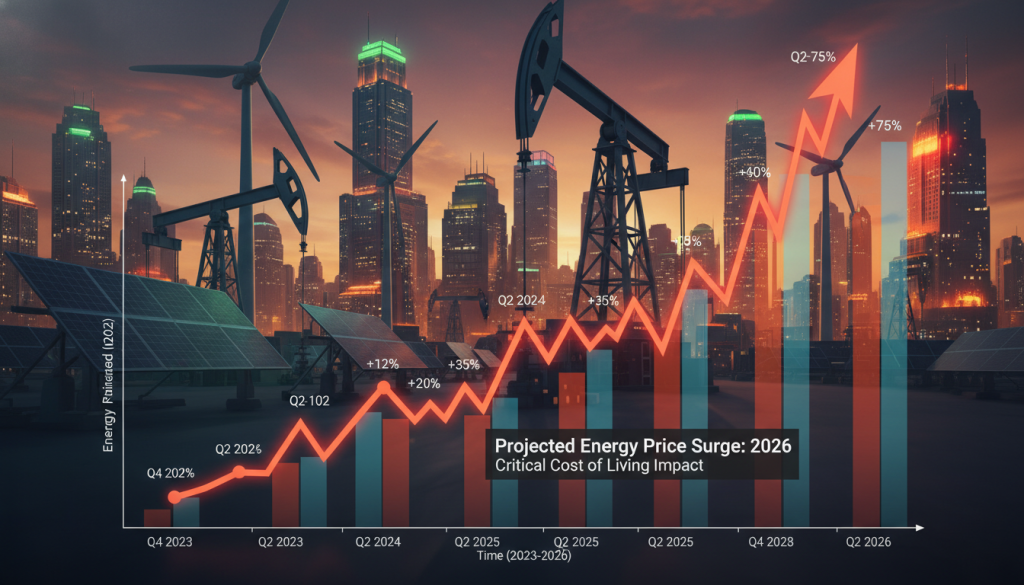
This year, the cost of power and fuel has moved to the forefront of Sri Lanka’s economic challenges. What was once a background concern for households and businesses is now a primary driver of financial pressure.
The situation represents a critical social and economic issue. Rising utility bills directly cut into disposable income. They threaten business viability and shake national macroeconomic stability.
Global factors are a significant driver. Geopolitical conflict triggered a surge of over 65% in wholesale gas prices. This external shock is felt worldwide.
Sri Lanka’s local structural vulnerabilities amplify these global pressures. The nation’s specific economic challenges make it particularly sensitive to such market movements. This creates a perfect storm for sustained financial strain.
The crisis is not a temporary spike. Analysts see implications stretching through 2026 and beyond. This report provides an objective analysis of the tangible consequences for everyday citizens.
It will examine the global causes, local vulnerabilities, and economic ripple effects. The human impact and potential policy pathways will also be explored. The central question is how Sri Lanka navigates this period of elevated energy prices.
Introduction: A Gathering Storm for Household Budgets
The concept of “energy poverty” is moving from academic discussion to kitchen-table conversation across the island. It describes a situation where a growing number of people must choose between powering their homes, cooking meals, or fueling transport and buying other essentials like food or medicine.
For Sri Lankan families, this is not a hypothetical future challenge. It is the current reality. Successive economic shocks have worn down financial resilience, making the latest surge in utility costs especially damaging.
The impact is cumulative. Each increase in electricity and fuel prices cuts deeper into strained monthly budgets. The anxiety over affordability is climbing the income ladder, creating widespread societal stress.
This pattern is not unique to Sri Lanka. Data from nations like the UK shows nearly 40% of households reporting difficulty staying warm are not on low-income benefits. Worry about bills only fades at very high earnings levels.
Understanding the origins of this gathering storm is crucial. It is the first step toward finding workable responses that can shield households and stabilize the economy in this difficult time.
Why Energy Pricing Becomes a Major Cost-of-Living Issue in 2026
Economists point to a simple yet powerful driver: the world’s appetite for power now far outstrips its ability to produce it. This fundamental supply-demand imbalance is the core economic explanation for intense pressure in global markets.
Post-pandemic industrial rebound, rapid digitalization, and the boom in power-hungry data centers have accelerated demand. In some regions, annual growth in electricity use has jumped from 2% to over 10%.
Consumers and businesses have little ability to switch away from power and fuel in the short term. This inelastic demand magnifies the impact of any supply shortfall.
Yet, this basic model is incomplete. The rise in cost reflects a complex mix of internal and external forces. Analysis from institutions like the Lawrence Berkeley National Laboratory confirms there is no single culprit.
A “perfect storm” of factors makes the situation in 2026 distinct. A prolonged geopolitical crisis disrupts traditional oil and gas flows. Structural underinvestment in global infrastructure has limited supply growth for years.
Heightened competition for scarce resources between nations adds further strain. These intertwined forces create a sustained crunch, not a temporary spike.
This represents a structural shift. It ends a long period where real electricity prices were flat or even falling. The new reality is one of persistent upward pressure on utility bills.
For Sri Lanka, this complex crisis is imported. The nation’s heavy reliance on foreign fuel and power means it directly feels every global market tremor. The country imports both the physical resources and the associated financial inflation.
Contrasted with past shocks, the current issue is severe in its cumulative impact. While absolute price levels may differ, the percentage increases hit a domestic economy already weakened by prior crises. This compounds the financial strain on every sector.
The Global Shockwaves Driving Local Prices
The origin of Sri Lanka’s current financial strain can be traced to specific, ongoing disruptions in the world’s most critical trade routes. Distant conflicts and blockades now have an immediate, calculable impact on what households pay for electricity and transport.
This direct link means global market volatility is a primary driver of domestic economic pressure. For an import-dependent nation, understanding these shocks is key to grasping the cost challenges ahead.
Geopolitical Conflict and Volatile Commodity Markets
The ongoing war involving the US, Israel, and Iran has reintroduced a high risk premium into global energy markets. Traders now factor the danger of supply disruption into every barrel of oil and shipment of liquefied natural gas (LNG).
This fear has triggered a crisis, with wholesale gas prices soaring over 65%. Benchmark crude oil values have also climbed sharply. The conflict creates uncertainty that stifles investment and complicates long-term supply contracts.
Every nation that imports fuel, including Sri Lanka, must now pay this added premium. It is a tax on instability levied by global markets.
The Strait of Hormuz Crisis and Its Ripple Effects
A strategic chokepoint, the Strait of Hormuz, is where theory becomes painful reality. Through this narrow passage flows about one-fifth of the world’s oil trade.
Recent attacks and blockades have reduced daily tanker transits from 50-60 to a mere handful. This creates physical shortages and sends freight insurance costs skyrocketing. These extra charges are passed directly through the supply chain.
Data from March 2026 is telling. Betting markets suggested only a 27% chance of a ceasefire by the end of April. This low probability indicates a prolonged disruption, not a short-term blip.
The ripple effects are global. Airlines in Asia have canceled widespread flights and enacted conservation measures. Similar actions are expected in Europe as the crunch continues.
Global Competition for Scarce Energy Resources
Even countries not directly affected by the war are scrambling for secure supplies. Nations are bidding aggressively for cargoes that do not originate from Russia or the Middle East.
This fierce competition for a limited share of available resources tightens the entire market. It raises prices for all importers, regardless of their political stance.
Sri Lanka, needing to purchase fuel on the open spot market, is caught in this bidding war. The nation must compete with wealthier countries for every shipment, pushing its import bill ever higher.
The combined effect of these shocks is seen in the Cost, Insurance, and Freight (CIF) rate for fuel shipments. This all-in price has escalated dramatically over the past month.
Analysts note a critical detail. While oil prices in 2026 may not have exceeded the 2022 peak in nominal terms, the percentage rise is significant. More importantly, it comes atop already high baseline costs from the previous year.
This compounding effect squeezes the national budget and household finances at the same time. The global shockwaves have indeed become a local financial earthquake.
Sri Lanka’s Specific Vulnerabilities in the Energy Sector
Three core domestic factors explain why global energy trends translate into severe financial strain for Sri Lankan consumers. The country’s power sector suffers from structural challenges that act as a magnifying glass for international market movements.
This internal landscape offers little buffer. It ensures that external price shocks are felt fully and quickly, with added domestic costs layered on top.
Heavy Reliance on Imported Fossil Fuels
Sri Lanka’s power and transport systems are built on foreign fuel. The nation imports nearly all the oil and coal used for electricity generation and transportation.
This makes it a classic price-taker in global trade. It has no control over the international cost of these commodities. When world prices jump, the increase lands directly on the national import bill.
There is no significant domestic production to act as a shock absorber. This reliance is the primary conduit for global instability to enter the local economy.
Aging Power Generation and Grid Infrastructure
The problem extends beyond what is imported to how it is used. Much of the country’s power generation fleet and transmission network is old and inefficient.
Deferred maintenance and investment over many years have taken a toll. This leads to higher technical losses, more frequent breakdowns, and lower overall efficiency.
These inefficiencies raise the unit cost of every kilowatt-hour delivered. Sri Lanka is not alone in this challenge.
Data from nations like the U.S. shows a similar pattern. Grids built decades ago are reaching end-of-life, requiring massive, unplanned capital expenditure.
Utilities worldwide deferred spending during periods of flat demand. They are now paying that bill just as demand surges globally.
For Sri Lanka, the impact is twofold. It must finance expensive fuel imports and also find funds for critical infrastructure upgrades simultaneously.
Foreign Exchange Pressures and Import Costs
A weaker Sri Lankan rupee creates a vicious financial cycle. It makes every dollar-denominated fuel shipment more expensive in local currency terms.
This directly worsens the nation’s trade deficit. The larger deficit then puts further downward pressure on the rupee’s value.
The cycle continues, relentlessly increasing the local currency cost of power. High global interest rates add another layer of difficulty.
They raise the cost of financing any new energy projects or grid modernization efforts. This locks in higher expenses for the long term.
Sri Lanka also faces fierce global competition for scarce resources. Every country is trying to build or repair its energy systems at the same time.
This competition drives up the price for essential equipment, skilled engineers, and construction materials. The nation must bid against wealthier countries for these resources.
The combined effect is a sector with low resilience. Global market increases are transmitted directly to consumers. Domestic inefficiencies and financial risks then compound those increases.
This structural reality turns a global challenge into an acute local crisis. It defines the risks facing the country’s economic stability.
The Ripple Effect: Energy Costs and Macroeconomic Stability
The financial shock from expensive power and fuel extends far beyond monthly utility statements. It triggers a chain reaction that threatens the broader economic foundation.
This secondary impact touches everything from the price of bread to the health of the national budget. Understanding these ripples is crucial for grasping the full scale of the challenge.
When core costs rise, stability in other areas becomes harder to maintain. The effect is like a tax on the entire economy, hindering growth and recovery.
Fueling Inflation Across the Economy
Higher transport and production costs raise prices for food, goods, and services. This mechanism is known as cost-push inflation.
It directly erodes the purchasing power of every rupee. International forecasts show a clear link.
In the U.S., surging gasoline prices are expected to push the annual Consumer Price Index (CPI) inflation rate back above 3%. A potential 1% month-on-month change is significant.
However, data reveals a critical counterpoint. In weakened economies, businesses often lack the pricing power to fully pass these higher input costs to consumers.
Purchasing Managers’ Index (PMI) data shows the jump in input costs was larger than the rise in output prices. This squeezes business margins instead of immediately raising retail tags.
The result is a double pressure. Consumer wallets are hit, while company profits shrink.
Impact on Business Competitiveness and Investment
High and unpredictable energy costs make Sri Lankan exports less competitive on the global market. Factories and farms face higher operating expenses than rivals in other nations.
This unpredictability also deters both local and foreign investment. Energy-intensive industries become particularly risky ventures.
Investors seek stable environments where long-term costs can be forecast. Volatile utility bills create exactly the opposite condition.
The impact is a slowdown in the capital needed for economic expansion. Job creation and technological upgrades suffer as a consequence.
Straining Government Finances and Subsidy Policies
Governments face a difficult policy choice with no perfect answer. Using scarce fiscal resources to subsidize consumer prices strains the national budget.
Such broad subsidies are often regressive. They benefit the wealthy as much as the poor and remove incentives for energy efficiency.
The alternative—allowing prices to rise fully—fuels public discontent and accelerates inflation. It is a tightrope walk with significant political risk.
Lessons from other countries are instructive. The UK’s £23 billion Energy Price Guarantee in 2022 was criticized for being poorly targeted.
It was a massive fiscal outlay that provided universal relief but did little to encourage conservation. Sri Lanka must design aid that is both effective and affordable.
The strain on government finances is acute in the current year. Every rupee spent on fuel subsidies is a rupee not spent on health, education, or infrastructure.
In the long terms, this trade-off can weaken the country’s human capital and future productivity. The policy crossroads is defined by these harsh trade-offs.
The Human Impact: Households Under Pressure
A silent crisis is unfolding in homes across the country as energy affordability reaches a breaking point. The statistical rise in utility costs has a direct, human impact. It forces difficult daily choices and creates widespread financial anxiety.
This pressure is not confined to any single group. It affects urban and rural households alike. The strain is visible in tightened budgets and rising stress levels.
Heat or Eat: The Affordability Crisis Deepens
Families are making severe trade-offs to manage their monthly bills. Some reduce meal portions or skip protein to save money. Others postpone essential medical visits or medications.
A dangerous coping strategy is limiting electricity use to unsafe levels. This might mean no fans during heatwaves or cooking in darkness. The “heat or eat” dilemma is a real issue for many.
International data reflects this trend. In the UK, over 15% of families in the middle-income bracket reported heat deprivation. This shows the crisis reaches well beyond the poorest citizens.
Coping Mechanisms and Rising Energy Debt
When monthly income cannot cover basic costs, people turn to risky strategies. Some take high-interest loans from informal lenders. Others voluntarily disconnect from the grid for periods of time.
Falling into arrears on utility bills has become common. This leads to a surge in household energy debt. The problem was severe even before the latest global shocks.
In Britain, household energy debt had already doubled to £4.5 billion. Similar patterns are emerging in other import-dependent economies. Once debt accumulates, it becomes a heavy burden for many months.
Anxiety Extending Beyond Low-Income Groups
Worry about bills is now a majority concern. It significantly affects middle-income professionals, small business owners, and pensioners. For these groups, energy prices consume a larger share of static incomes.
Data is revealing. In the UK, 35% of households earning £50,000-£59,000 were “very worried” about their bills. Three-quarters of all Britons reported anxiety over energy costs.
This broad-based anxiety fuels social disillusionment. People feel they cannot get ahead despite hard work. Confidence in institutions erodes when daily struggles intensify.
Public demand for government action is overwhelming. International polling shows 85% of people felt state support did not go far enough. Citizens seek a tangible way forward from this relentless financial pressure.
The human toll extends beyond economics. It affects mental health, family stability, and long-term planning. This daily stress represents the core social consequence of the affordability crisis.
Policy Crossroads: Government and Regulatory Responses
Crafting a response to soaring household bills presents a fundamental test for policymakers. They must balance immediate relief with long-term fiscal health. Every choice involves significant trade-offs.
The core debate centers on who should receive help and how to deliver it. There is no perfect policy that is fast, cheap, fair, and efficient all at once. Leaders must prioritize.
International examples offer valuable lessons. The story from other nations shows what works and what fails. Sri Lanka can learn from these experiences.
Targeted Subsidies vs. Universal Support Mechanisms
Governments have two primary tools. Targeted aid funnels resources to the poorest through welfare systems. Universal support, like price caps, helps everyone.
Each way has clear pros and cons. Targeted aid is fiscally efficient. It saves public money by focusing on those in greatest need.
However, it is hard to administer quickly. Means-testing can miss struggling families just above the poverty line. Complex paperwork creates barriers.
Universal support is simple and popular. It provides immediate, blanket relief. Yet, it is extremely costly and can be regressive.
Wealthy households with high consumption benefit more in cash terms. This was seen in the UK’s Energy Price Guarantee. It subsidized luxury use while straining the budget.
The UK Chancellor recently ruled out universal support. He called for a response that is “responsive” and “responsible with public finances.” This highlights the fiscal dilemma.
One proposed middle ground is a universal discounted block of ‘essential’ energy. All homes get a discount on a base amount of power. Lower-income households receive a deeper discount.
This model is both universal and progressive. Polling shows over 70% public support for this policy. It aims to protect basics without encouraging waste.
Lessons from Past Global Energy Crisis Interventions
History provides a clear guide. The UK’s £23 billion Energy Price Guarantee from 2022 is a cautionary tale. It was a massive fiscal outlay with mixed results.
The program was regressive in cash terms. It did not encourage conservation because it subsidized all consumption. Removing price signals can backfire.
Positive lessons come from Germany and Austria. They implemented discounts on a set proportion of typical household use. This retained an incentive for people to reduce demand.
The key lesson is that aid must preserve some market signal. When consumers feel no need to conserve, shortages and higher costs can worsen.
Another lesson is about speed versus accuracy. Broad measures can be deployed fast. Targeted programs take time to design but use funds more wisely.
Sri Lanka must weigh these international examples. The local context, with its limited fiscal space, makes efficiency paramount.
The Challenge of Designing Effective, Affordable Aid
Putting a good policy into practice is difficult. Sri Lanka faces several practical hurdles. Administrative capacity is a major one.
Effective means-testing requires accurate income data. Many countries lack the infrastructure for this. Sri Lanka’s social registry systems may need upgrading.
Implementing income-based tariffs is complex. It requires robust IT systems and verification processes. This takes significant time and investment.
There is also a political challenge. Once broad support is given, withdrawing it is very hard. Public expectations become entrenched.
The “universal essential block” model tries to solve these issues. It is simpler than full means-testing. It also avoids the high rate of spending on universal caps.
This way forward acknowledges a hard truth. There is no cost-free solution to high prices. Any intervention requires trade-offs.
The trade-offs are between:
- Speed of delivery versus accuracy of targeting.
- Fiscal cost versus comprehensiveness of coverage.
- Market efficiency versus social protection.
For Sri Lanka, the path likely involves a phased approach. Immediate, temporary relief may be necessary. This should transition to a more sustainable, targeted system over time.
The ultimate goal is clear: shield the vulnerable without bankrupting the state. It is the central policy puzzle of this crisis.
2026 vs. Previous Crises: A More Complex Challenge
A comparative lens shows the current crunch differs fundamentally from past market shocks. The difficulties in 2026 stem from a dangerous mix of factors.
These factors create a scenario where old solutions may fail. The situation demands a fresh look at the crisis.
Comparing the Scale and Duration of Price Shocks
Headline numbers can be misleading. The nominal cost of a barrel of oil today has not surpassed the 2022 peak of $123.
Yet, the percentage rise from an already high baseline is more severe. This matters greatly for inflation.
A sustained supply disruption is expected. The Strait of Hormuz blockage points to a long time of tight markets.
This is not a short spike. It is prolonged pressure that grinds down economies. The story here is about endurance, not a single event.
Reduced Fiscal Space for Government Intervention
Governments had more room to act in the past. In 2022, global support packages exceeded 2% of GDP in many nations.
The way forward in 2026 is fiscally constrained. New state aid announced so far totals less than £100 million globally.
Sri Lanka faces particular limits. High sovereign debt and IMF program conditions restrict large-scale subsidy spending.
Every rupee for consumer relief must be carefully weighed. There is no budget for blanket price caps like those seen before.
Weakened Household Resilience After Prior Shocks
Families entered this period with depleted buffers. Savings were drained by the pandemic, the 2022 crisis, and local economic turmoil.
Existing household debt is higher now. This leaves little share of income available to absorb higher utility prices.
The global jobs market offers no cushion. In the United States, the hiring rate has cooled to levels last seen during the financial crisis.
Wage growth is unlikely to offset living cost increases. This weakens the traditional path to recovery.
The cumulative effect over recent years is critical. Each successive shock has reduced the capacity to cope with the next one.
The tools that provided relief in the past are now blunt or unavailable. This defines the unique challenge of the present time.
New approaches are required for both policy and personal finance. The coming year will test the adaptability of all economic players.
Beyond the Crisis: Structural Challenges for Sri Lanka’s Energy Future
The path to lasting affordability requires confronting fundamental weaknesses in how electricity is produced and delivered. Short-term crisis management must be coupled with long-term structural reforms.
These reforms aim to build a system resilient to global shocks. The goal is national energy security and stable household bills.
Accelerating the Renewable Energy Transition
Domestic solar, wind, and hydropower are the only way to permanently insulate Sri Lanka from fossil fuel price shocks. This shift reduces reliance on volatile international markets.
Such investment enhances national security. It also creates local jobs in installation and maintenance.
However, the upfront costs are significant. The country faces fierce global competition for equipment like solar panels and turbines.
Supply chain bottlenecks can delay projects and raise prices. Despite this, the long-term economic case is strong.
Every locally generated kilowatt-hour is one less imported. This improves the trade balance over time.
Investing in Grid Modernization and Resilience
A renewable-heavy system demands a smart, flexible grid. Traditional networks were not built for variable sources like sun and wind.
Modernization involves advanced sensors, batteries, and control systems. This infrastructure ensures reliable power delivery.
The paradox is clear. The cost of generating electricity is falling. Yet, the cost of delivering it reliably is rising.
Delivery systems now account for a growing share of the bill. Moving cheap electrons over long distances is hard.
Permitting delays are a major hurdle. For transmission and generation projects, they routinely add 15-35% to total costs.
International examples show how delays inflate project costs for ratepayers. Streamlining approval is a key need.
State-level clean energy mandates can raise near-term retail rates. This is due to accelerated capital deployment.
The investment is essential. A modern grid supports economic growth and attracts further investment.
Reforming Tariff Structures and Encouraging Efficiency
The current system of blanket subsidies is financially unsustainable. Reform must protect the vulnerable without encouraging waste.
A progressive structure is widely proposed. It would offer a ‘lifeline’ block of essential power at a low rate.
Consumption beyond this block would face higher prices. This encourages conservation among high users.
Demand-side management is another critical tool. Promoting energy-efficient appliances and industrial processes reduces overall growth in consumption.
Such programs lower bills and ease pressure on the power system. They are a low-cost way to enhance security.
Transitioning to this model involves risks. Public acceptance and administrative capacity are challenges.
Yet, the long-term benefits are clear. These structural changes, while requiring significant investment now, are essential for future affordability.
They represent a strategic shift from crisis response to lasting stability. The retail market must evolve to support this goal.
Navigating the Future: Energy Affordability as a National Priority
The evidence presented points to one clear conclusion. The affordability of power is now central to economic welfare and social stability in Sri Lanka.
Tackling this issue demands a multi-pronged strategy. It requires smart short-term relief, steady infrastructure investment, and a lasting shift to renewables. Policy must balance human needs, fiscal limits, and correct price signals.
A national consensus should treat electricity as an essential service. A framework must ensure basic access is affordable for all households. One proposed way is a universal discounted block of essential power.
The impact of high prices on monthly bills is severe. The coming years present real challenges. Inaction will deepen the strain.
Navigating this period is more than an economic task. It is a fundamental test of national resilience and the social contract.