Sri Lanka Enters 2026 With Fresh Focus on Economic Stability

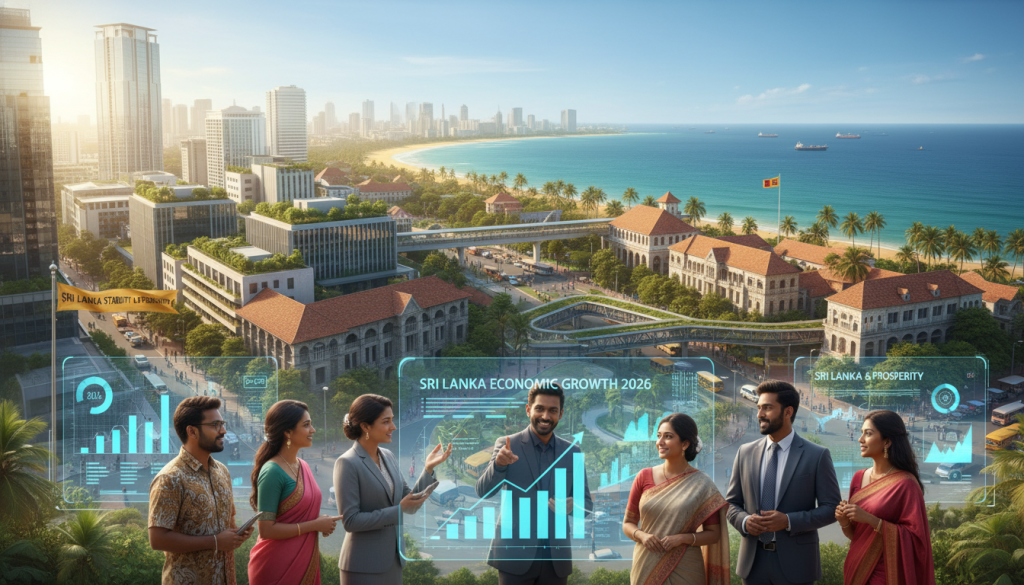
The nation is seeking a new beginning. This follows several difficult years marked by repeated shocks.
The hope for a steadier path and a recovery is now palpable. It comes after a prolonged period where multiple crises unfolded in succession.
This article examines the factors behind this renewed emphasis. It will look at the journey from crisis recovery to new strategies for growth.
Key themes include a potential rebound in foreign investment. Sectoral diversification and critical policy reforms also underpin the stability agenda.
The narrative here is one of cautious optimism. It acknowledges past hardships while looking toward a more sustainable future.
This pursuit of a solid foundation follows a time of exceptional strain on national resilience. The detailed analysis in the next sections will explore this path forward for the economy.
Navigating a Decade of Sequential Shocks
Understanding the current push for stability requires a look back at a difficult period of consecutive shocks. The past eight years tested the nation’s social and economic foundations in rapid succession.
The Easter Sunday Attacks and the Blow to Tourism
The 2019 Easter Sunday terror attacks were a profound shock. They severely damaged social cohesion and investor confidence.
The tourism sector, a vital source of foreign exchange and jobs, was hit hardest. Visitor numbers plummeted almost overnight. This sudden stop created immediate financial strain across the country.
COVID-19’s Deepening of Financial Stress
Just as the nation grappled with that crisis, the global pandemic struck. COVID-19 lockdowns brought widespread economic activity to a halt.
Livelihoods were disrupted on a massive scale. The pandemic deepened existing financial stress for households and businesses alike. It slowed any potential rebound to a crawl.
Cyclone Ditwah: A $4.1 Billion Natural Disaster
In late 2025, Cyclone Ditwah delivered another devastating blow. It is one of the most destructive natural disasters in recent history.
Data from the World Bank and ILO quantifies the damage. Direct physical costs reached an estimated US$4.1 billion. This figure represents almost 4% of the country’s GDP.
The storm affected nearly two million people across all 25 districts. Up to 374,000 workers faced potential monthly income losses of US$48 million. This event threatened livelihoods on an enormous scale.
These sequential crises compounded one another. Each new shock limited the capacity for recovery from the last.
They exposed deep systemic vulnerabilities. This challenging backdrop is essential for understanding the renewed focus on building a resilient economy.
A Historic Rebound: FDI Crosses the $1 Billion Threshold
Crossing a symbolic billion-dollar threshold, investment data from 2025 tells a story of renewed international faith. Foreign direct investment surged by 72% to a historic $1.06 billion last year.
This milestone is the first of its kind for the nation. It represents a powerful vote of confidence from the global business community.
Such capital inflows are the lifeblood of economic recovery. They fund new projects, create jobs, and directly support the broader stability agenda.
Top Contributors: Singapore, India, and France Lead Inflows
The sources of this capital reveal strategic partnerships and regional trust. Three nations provided the majority of the funds.
- Singapore led with an infusion of $318.9 million.
- India followed closely, contributing $213.7 million.
- France was a significant third, investing $122.5 million.
These leading contributors are key regional and global economic players. Their commitment signals a belief in the market‘s potential and the country’s reform trajectory.
This diversified inflow helps strengthen the services and financial sector. It is a positive indicator of overall performance.
Greenfield Projects Signal Long-Term Confidence
Beyond the total figure, the type of investment is particularly telling. Greenfield projects involve building new operations from the ground up.
They represent a deeper, long-term bet on a country’s future. In 2025, twenty-four such new projects were launched.
These ventures contributed $134 million, or about 13% of the total FDI. This share is significant.
Historically, greenfield investment in Sri Lanka has ranged between 2% and 10% of total inflows. Exceeding this norm points to higher risk tolerance among investors.
It reflects growing faith in the nation’s sustainable development path. This shift is crucial for building a resilient economy.
While this FDI rebound is a strong positive signal, it is one piece of a larger growth puzzle. The next question is which specific industries are attracting this capital.
Manufacturing and Port Development Anchor Growth
Manufacturing and maritime infrastructure are emerging as the primary destinations for major project funding. Recent foreign investment data confirms this sharp focus.
Two key sectors attracted over 70% of all new capital last year. This concentration provides a solid foundation for long-term growth.
The $3.7 Billion Sinopec Refinery in Hambantota
A single project symbolizes the scale of this shift. The $3.7 billion oil refinery, led by China’s Sinopec, represents the largest-ever foreign investment in Sri Lanka.
Located in Hambantota, it addresses a critical national challenge: energy security. The refinery will reduce reliance on imported fuel.
This cuts a major import cost and strengthens the balance of trade. It is a strategic development for the entire industry.
Colombo Port City and Adani’s Expanding Footprint
Parallel development is transforming the Colombo coastline. The $1.4 billion Colombo Port City project is a multi-purpose special economic zone.
It aims to become a vibrant commercial hub for finance, logistics, and high-value services. This enhances the regional trade and logistics profile.
Major international players are committing significant capital. India’s Adani Group is building a new $700 million terminal at the port.
In January 2026, China Harbour Engineering Company confirmed a further $300 million FDI for Port City Colombo. This underscores ongoing confidence in port infrastructure.
Sectoral data from 2025 tells the definitive story. Manufacturing attracted 46% of all foreign capital.
Port development followed with a 26% share. Together, they anchor the economic expansion.
These large-scale projects create thousands of jobs. They also stimulate ancillary industries across the supply chain.
Improved port management and capacity position Sri Lanka as a key node in global shipping routes. This sets the stage for the next sectors poised for a strategic rebound.
Tourism’s Strategic Rebound Towards High-Yield Travel
A clear strategic pivot is reshaping the country’s approach to welcoming international visitors. Following severe shocks, the tourism sector is being deliberately reoriented for greater long-term benefit.
This move is not just about recovery to old levels. It aims to build a more valuable and resilient part of the national economy.
Global Brands Like Shangri-La and Marriott Double Down
Major international hospitality leaders are voting with their capital. Their continued expansion signals strong faith in the market‘s future.
Global chains have a significant and growing presence. Key players actively investing include:
- Shangri-La from Hong Kong.
- Hilton and Marriott from the United States.
- Taj and ITC from India.
Interest is also broad-based across the region. Nepal’s CG Corp Global, for instance, has invested in the local Jetwing Hotels group.
This confidence translates into real growth in capacity. Data indicates over 20,000 new hotel room keys will be operational in 2026.
Such a supply-side response is a direct bet on anticipated demand. It prepares the industry for a new phase of development.
Shifting Focus from Volume to Experiential Value
The core of the new strategy is a fundamental shift. The goal is no longer to chase the highest number of arrivals.
Instead, the focus is on attracting higher-spending tourists. These visitors seek unique, experiential travel.
This could include curated wildlife safaris, wellness retreats, or deep cultural heritage tours. The aim is to increase revenue per visitor significantly.
Crucially, this approach boosts foreign exchange earnings for the country. It also creates more valuable employment opportunities within the sector.
Jobs linked to high-end services tend to offer better wages and stability. This improves overall business and worker performance.
This strategic pivot is a key part of building a more resilient economy. It moves a vital industry toward a model based on sustainable value.
Building a Resilient Economy Beyond Traditional Exports
Future prosperity hinges on leveraging intellectual capital and creativity as primary economic drivers. For true economic resilience, the country must look beyond its historical export pillars.
This means building a more diverse and innovative base for growth. The goal is to create higher-value goods and services for the global market.
The Limitations of Tea, Rubber, and Garments
Sri Lanka‘s export profile has long relied on a narrow range of products. Tea, rubber, coconut, and apparel are the traditional mainstays.
These sectors face significant structural challenges. Global commodity prices are highly volatile, directly impacting revenue.
Intense international competition, especially in garments, squeezes profit margins. There is also limited potential for high-value addition within these established models.
Relying so heavily on a few products makes the entire economy vulnerable to external shocks. This limits long-term stability and growth prospects.
A broader policy focus on enhancing exports is crucial. This includes measures like potential tax reforms to stimulate business activity.
For instance, the government’s consideration of a VAT rate reduction in 2Q24 is part of a wider push for economic resilience. Such support aims to boost competitiveness beyond traditional fields.
Embracing the Creative Economy Paradigm
A promising pathway for diversification is the “creative economy.” This paradigm shift is based on generating value from knowledge and ideas.
British author John Howkins defined it as activities using creativity and intellectual capital. It spans fifteen core sectors.
These include:
- Advertising and marketing.
- Film, television, and music.
- Design, architecture, and software development.
This concept is not new to Sri Lanka. It has been discussed in forums like a 2011 Central Bank session for over a decade.
The creative economy leverages the nation’s rich cultural heritage and skilled human capital. It creates unique products and services for trade.
Critically, it moves the country up the value chain. Instead of exporting raw materials or basic garments, it exports stories, designs, and solutions.
This model fosters greater innovation and builds inherent resilience. It is better suited for a fast-changing, knowledge-driven world.
The next section explores a powerful global example of this model in action. It shows how a creative industry can achieve massive scale and influence.
Lessons from Nollywood: A Blueprint for Creative Industries
Examining the rise of Nollywood reveals practical strategies for low-budget, high-impact cultural production. Nigeria’s film sector became the world’s second-largest by volume in just two decades.
This journey offers a tangible blueprint for other nations. It shows how a creative industry can achieve massive scale despite significant constraints.
Adapting Low-Cost Innovation and Global Distribution
Nollywood’s success was not built on huge budgets. It thrived through ingenuity and a deep connection to local audiences.
Key pillars of its model include:
- Locally Resonant Stories: Films addressed themes familiar to African and diaspora viewers.
- Innovative Production Techniques: Fast, low-costs shoots using digital technology maximized output.
- Digital Distribution: It bypassed traditional cinema chains, using DVDs and later streaming platforms.
This approach built a vast market and a reliable supply chain. Digital platforms like Netflix and Amazon Prime then provided global reach.
This lesson is crucial. Creative growth can start small and scale through smart innovation and modern distribution.
Unlocking the Potential of Ranminithenna Film Village
Sri Lanka possesses a significant but underused asset for this very purpose. The Ranminithenna Film Village near Hambantota has substantial physical capacity.
Its potential, however, remains largely untapped. Effective management and a clear strategic vision could transform it.
University researchers and industry practitioners should study Nollywood’s model. They can identify adaptable strategies for Sri Lankan film, television, and digital content creation.
Applying these lessons could catalyze a homegrown creative sector. The outcomes would be multifaceted.
It would generate new export revenue from selling content. It would create skilled employment for writers, technicians, and actors.
It would also build cultural soft power for the nation. A vibrant creative sector boosts overall economic performance.
The key takeaway is clear. Building a creative economy does not require reinventing the wheel. Learning from global peers provides a proven path forward.
Policy Foundations: NEDA and the Push for Institutional Support
Institutional frameworks and targeted policies are fundamental for translating economic vision into tangible progress. Visionary ideas for growth require solid foundations to succeed in practice.
This is where dedicated agencies play a critical role. The National Enterprise Development Authority (NEDA) is positioned as a key driver for this agenda.
NEDA’s mandate includes fostering innovation and supporting emerging sectors. Its work provides the necessary scaffolding for new economic paradigms to take root.
Benchmarking International Models like Nigeria’s CEDF
Looking abroad offers clear blueprints for effective support. In 2024, Nigeria approved a Creative Economy Development Fund (CEDF).
It also launched an Intellectual Property Monetisation Pilot. These are structured financial tools designed specifically for creatives.
Such models provide vital capital and protect creators’ rights. NEDA is well-positioned to study and adapt these international best practices.
The authority has already initiated important dialogue around the creative economy. This indicates growing institutional recognition of its potential.
Benchmarking successful policy from other nations can accelerate local development. It helps avoid common pitfalls.
Financial mechanisms like the CEDF address a major hurdle for artists and entrepreneurs. Access to funding allows ideas to become viable businesses.
This aligns with broader goals of economic diversification. It moves policy beyond general statements to actionable support.
Aligning Education Reforms with Economic Vision
Effective government strategy must look beyond financing. It needs to prepare the workforce of the future.
This requires aligning national education reforms with the long-term economic vision. Curricula must foster creativity, critical thinking, and digital literacy from an early age.
The skills needed for a modern, creative economy are different. Rote learning is less valuable than problem-solving and innovation.
Educational reforms should start in primary schools and extend through universities. Partnerships between industry and academia are crucial.
Technical training programs can build specific competencies in high-demand sectors. This creates a pipeline of talent ready for new opportunities.
Such alignment ensures that human capital development keeps pace with economic ambitions. It turns a population into a competitive advantage.
This comprehensive approach to policy builds lasting resilience. It signals to investors that the nation is building for the long term.
Stable and forward-looking government frameworks underpin the confidence themes discussed earlier. They complete the stability equation for sustainable growth.
Sri Lanka at the Crossroads of Regional Progress
Regional economic integration is becoming a defining force for progress across Asia. The nation’s recovery path is not happening in isolation.
It is part of a larger shift toward connected markets and shared infrastructure. This context was central at a major multilateral forum in 2026.
The discussions there offer a crucial lens for understanding the broader landscape. They highlight both opportunities and imperatives for the country.
Insights from the 2026 ADB Meetings in Samarkand
Leaders gathered in Samarkand, Uzbekistan for the Asian Development Bank’s 59th Annual Meetings. The theme was “Crossroads of Progress: Advancing the Region’s Connected Future.”
This framing placed physical and digital connectivity at the heart of economic strategy. A key mantra emerged: integration is power.
High-level talks focused on several critical areas for cooperation:
- Building cross-border transport and energy infrastructure.
- Redesigning regional supply chains for greater resilience.
- Interconnecting national power grids, like the ASEAN Power Grid.
- Leveraging digital technology, AI, and fintech for development.
- Mobilizing private capital for climate and growth needs.
For Sri Lanka, the meetings presented a clear dual message. The opportunity is to leverage these multilateral partnerships and integrate into stronger regional networks.
The warning is that nations lagging in governance or policy risk being left behind. Consistent and coherent policy is vital to attract the investment needed for this connected future.
The ADB’s role extends beyond high-level vision. It includes direct support, such as a recent $100 million boost for SME technical to empower local businesses.
Integration as Power: Supply Chains and Energy Grids
The concept that “integration is power” moves from theory to practical projects. Redesigned, resilient supply chains are a top priority for the region.
This shift follows global shocks that exposed the fragility of long, concentrated networks. Countries now seek shorter, more diversified routes.
Sri Lanka can position itself within these new networks. Its ports and potential as a logistics hub become even more valuable.
Energy security is another pillar. Initiatives like the ASEAN Power Grid allow countries to share electricity across borders.
This stabilizes national grids and taps into cleaner energy sources. For a nation rebuilding, such connections offer a path to greater stability.
Forging stronger trade agreements and partnerships is essential to capitalize on these trends. It moves trade beyond simple exchanges to deep economic linkage.
This regional perspective sets the stage for the next logical step. It leads directly to a discussion of the nation’s inherent geographic advantages in this integrating landscape.
Leveraging Geographic Destiny as a Transshipment Hub
The Indian Ocean’s busiest shipping lane passes directly by the island’s shores. This prime location is one of Sri Lanka‘s most enduring strategic assets.
It provides a natural foundation for immense commercial and logistical significance. The nation sits astride the world’s primary East-West maritime corridor.
Capitalizing on the Main East-West Shipping Route
Over 60,000 vessels transit this route annually. They connect Asian manufacturing centers to European and African markets.
This position is a commercial imperative global shipping lines cannot ignore. The Port of Colombo has capitalized on this for decades.
It serves as South Asia’s largest transshipment hub. Large mainline vessels transfer cargo here to smaller feeder ships for regional delivery.
Expert analysis points to expanding trade between Asia and Africa. Maritime traffic through the Indian Ocean is expected to grow significantly.
This trend directly benefits Colombo’s operations. It reinforces the port’s role as a critical node in global supply chains.
Logistics and High-Value Services as Growth Sectors
The real opportunity lies beyond basic port operations. Geographic destiny should catalyze growth in an entire ecosystem of related services.
This includes advanced logistics, supply chain management, and trade financing. The goal is a shift from being a mere stopover point.
The vision is to become a center for trade-related intelligence and coordination. Businesses in these sectors add high value to the market.
They create skilled jobs and attract foreign expertise. Developing this ecosystem requires targeted investment in infrastructure and policy.
Stability and operational efficiency are prerequisites. Only with these can Sri Lanka fully capitalize on its locational gift.
The Port City Colombo project is key to this vision. It aims to provide a world-class environment for maritime business and finance.
Leveraging geography is about smart strategy, not just luck. It demands a forward-looking approach to sustained economic growth.
The Stability Equation: Reserves, Debt, and IMF Backing
Official figures released in early 2026 point to a strengthening economic position. The nation’s financial health is now defined by a core set of macroeconomic indicators.
These numbers form a crucial “stability equation.” Together, they rebuild investor confidence and create space for sustainable economic growth.
Post-Crisis Reserves Reach $7 Billion
Foreign exchange reserves have recovered to a post-crisis high. They now stand at approximately $7 billion.
This stockpile acts as a vital buffer against external shocks. It provides the central bank with crucial firepower to stabilize the currency.
Stronger reserves help manage import costs and support international trade. They are a foundational pillar of renewed stability.
Debt Restructuring and the Path to Fiscal Sustainability
Progress on public external debt is another key metric. The restructuring process is now 92% complete.
This work is essential for restoring fiscal sustainability. It reduces the government’s debt burden and paves the way for renewed market access.
Successful debt resolution signals serious commitment to necessary reforms. It is a critical step for long-term stability.
International endorsement comes via the International Monetary Fund. A staff-level agreement for a $700 million tranche confirms continued support.
This IMF backing validates the country’s reform program. It provides both financing and a policy anchor for the recovery.
Growth forecasts reflect this improving landscape. The Central Bank of Sri Lanka projects economic growth of 4% to 5% for 2026.
This outlook is more optimistic than the IMF’s projection of 3.1% to 3.3%. The range offers readers a spectrum of expert views on the pace of expansion.
However, this stability, while improved, remains fragile. It must be actively maintained through consistent policy and disciplined reforms.
The equation is clear. Robust reserves, resolved debt, and international backing underpin the nation’s current path. They are the bedrock for a more secure future.
Persistent Challenges on the Road to Stability
Beyond the encouraging headlines, a series of deep-rooted and emerging challenges could slow the momentum of recovery. Sustained economic resilience requires more than just positive indicators.
It demands honest confrontation with ongoing vulnerabilities. These issues span institutional frameworks, environmental threats, and complex international relations.
The nation’s journey is far from complete. Navigating these hurdles will test the capacity for long-term planning and effective management.
Governance Reforms and Policy Continuity
Institutional weaknesses pose a significant long-term risk. Recurring political instability and bureaucratic red tape can stifle investment and innovation.
Investors and businesses need predictability. They seek a stable regulatory environment where rules are clear and consistently applied.
Enduring governance reforms are therefore critical. The government must build systems that function reliably across political cycles.
This includes streamlining business approvals and ensuring policy continuity. A change in administration should not mean a complete reversal of economic strategy.
Such consistency signals maturity to the international community. It is a cornerstone for attracting the capital needed for major infrastructure and industry projects.
Climate Vulnerability and Reconstruction Needs
The ever-present threat of natural disasters adds a costly layer of complexity. Cyclone Ditwah was a stark reminder of this vulnerability.
Its aftermath leaves an ongoing burden of reconstruction. The physical damage, estimated at billions, requires years of repair work.
Rebuilding stronger is not optional. It is a financial imperative to protect against future shocks.
This means investing in climate-adaptive infrastructure. Roads, power grids, and housing must be designed to withstand extreme weather.
The financial costs of inaction are simply too high. Building physical resilience is now a core part of national economic resilience.
Navigating Geopolitical Investment Competition
The country also operates in a delicate geopolitical space. Major powers like India and China are actively investing across the region.
While this brings capital, it can complicate project approvals and foreign relations. The government must balance these relationships carefully.
Each major investment decision is scrutinized through a strategic lens. Maintaining sovereign policy independence while welcoming foreign capital is a delicate act.
Another pressing challenge is meeting international financial standards. The nation must pass a crucial anti-money laundering evaluation.
Failing this assessment could land the country on the FATF “Grey List.” This would severely hamper international trade and banking relations.
Avoiding this punitive listing is a top priority for financial authorities. It is essential for maintaining global market access.
These challenges are not insurmountable. They represent the next set of problems that require focused attention and disciplined reforms.
How they are addressed will directly shape the stability achieved in the coming years. The road ahead remains demanding, but navigable with clear-eyed management.
Charting a Connected Future for Sri Lanka
The collective task ahead is to transform geographic advantage and investor confidence into lasting, inclusive growth. After a difficult decade of shocks, the country stands at a crossroads.
Fundamental choices about direction remain. Attracting foreign capital must be paired with sectoral diversification. Geographic strengths require policy stability. Creative potential needs institutional support.
Thought leaders call for a genuine paradigm shift. Economic thinking must embrace innovation and regional integration. Long-term sustainability depends on aligning a national vision with education reforms.
Cautious optimism is warranted. Hard-won recovery on reserves and debt is real. Persistent challenges demand consistent, evidence-based policymaking.
Sri Lanka‘s connected future—digitally, commercially, and regionally—is not preordained. It must be actively charted through collective will and smart choices. This path builds a more resilient and prosperous economy.